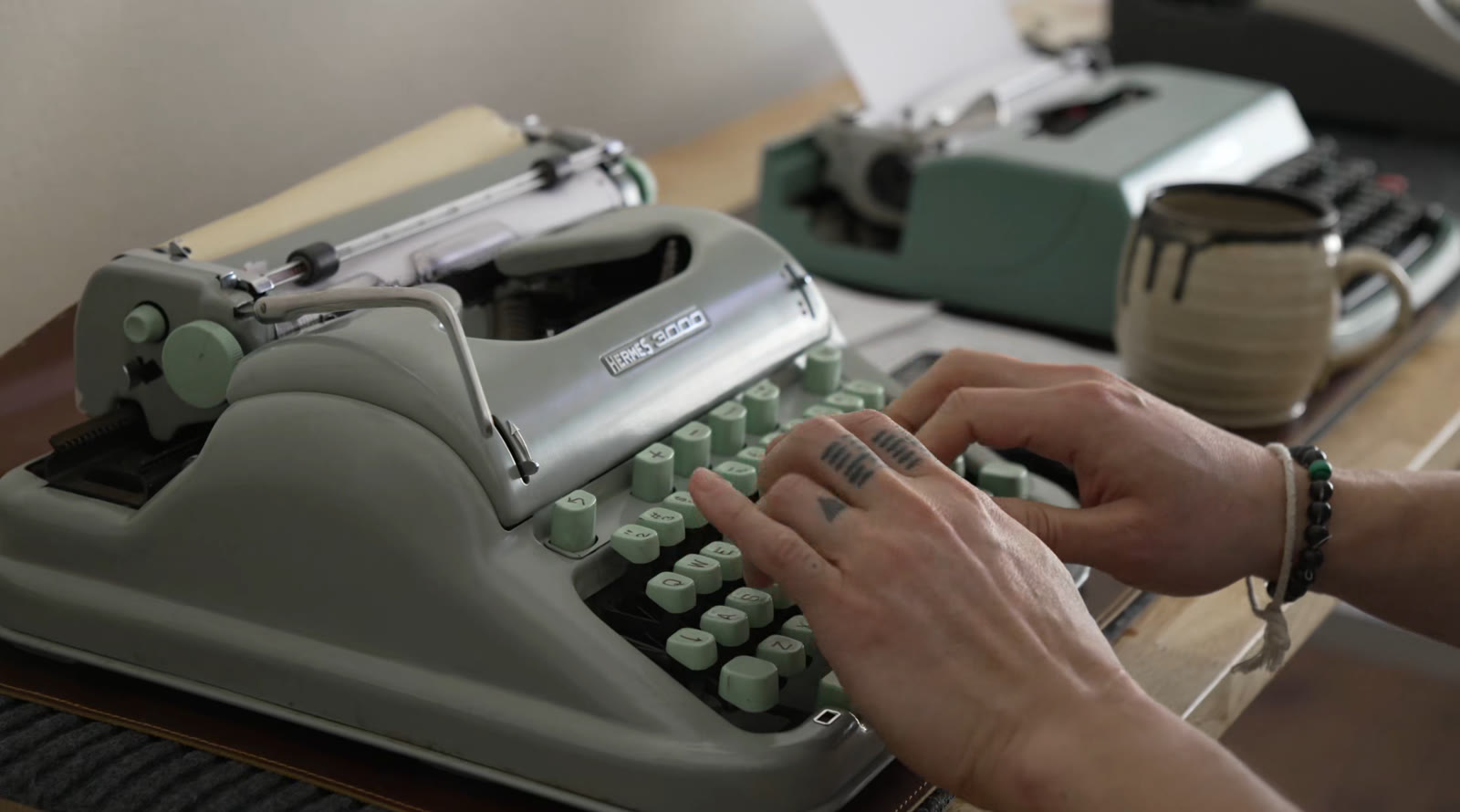
Typewriter not required! It's just what I use as part of my practice.
Writing flows better when you think of it as a physical practice that happens to use words.
You can write this way to work on a book. Or because it's fun.
It's as useful as drills are for an athlete, or scales for a musician. A creative discipline is something AI could never replace.
Typewriter not required! It's just what I use as part of my practice.
I'd been meditating and doing yoga for a long time when I came back to writing on a manual typewriter each morning.
When I wrote, my mind silenced the way it did in meditation, except I was also making something. The attention training I'd learned sitting on a cushion worked differently — and in some ways better — when my hands were moving and words were landing on paper.
So I put together a practice that maps that territory.
I've taught writing at retreats in Italy, Bali, and Mexico. I've watched hundreds of people give themselves space to unplug and make something that ended up transforming them. It only requires a pen or a keyboard and fifteen minutes each day.
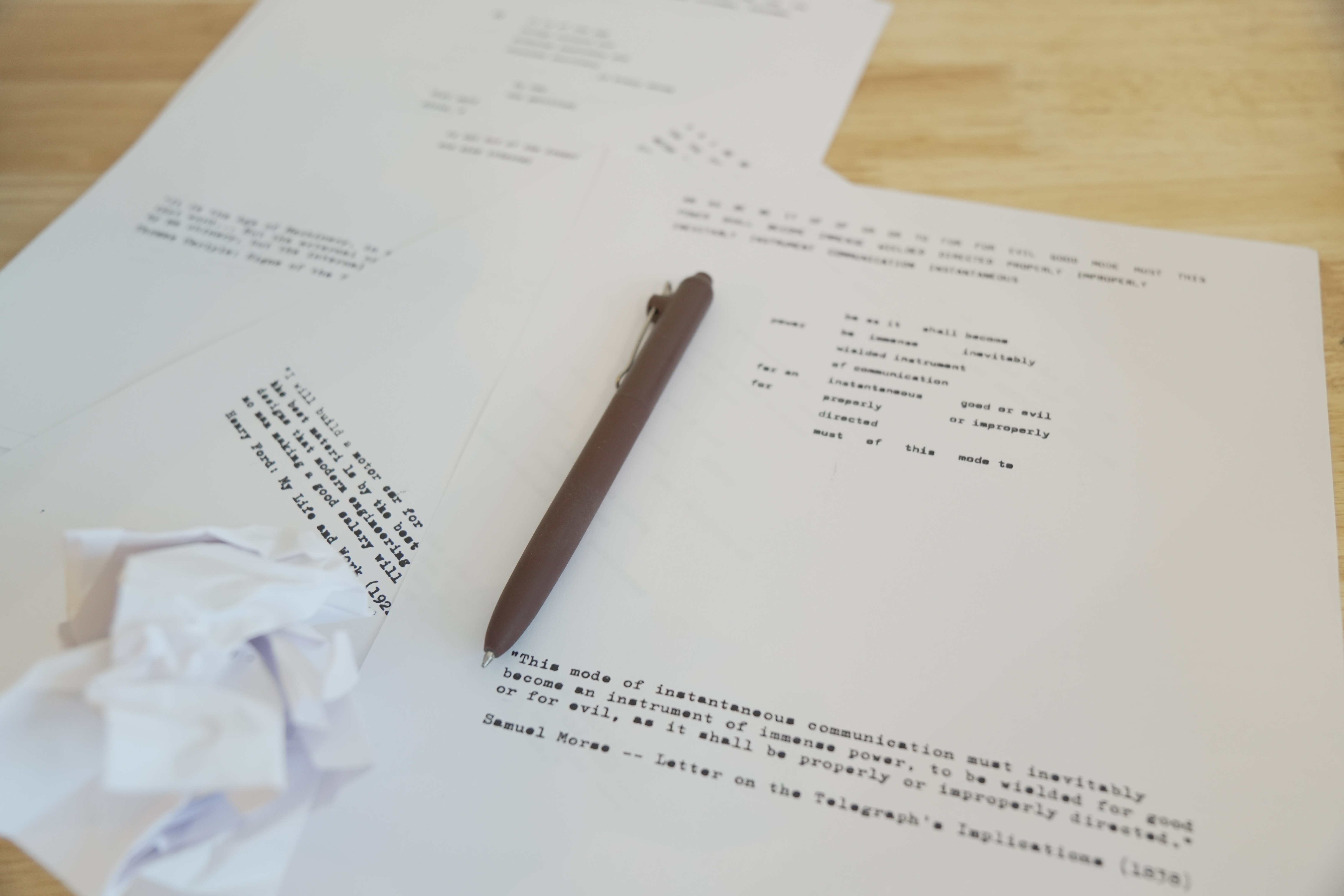
What tends to happen
The physical rhythm of writing paired with methods for directing your focus gives your nervous system something steady to organize around. And then what you're writing starts to surprise you. Images arrive that you didn't plan.
Most writers are too much in their heads. The real material lives below the surface. The practice is learning to recognize that shift, to stay with it, and to return to it when you drift.
Over time, this becomes a kind of perceptual training. It follows you into conversations, decisions, and the rest of your day.
It's just writing. Nothing fancy. Most people are already doing ninety percent of it. The last ten percent is a specific discipline for how you show up, which is harder than it sounds. That's what the courses and the five-day sequence are for. They provide company and structure while the practice takes root.
"The writing exercises brought ideas and memories out of me that had been hidden or buried for years. Three pages later I found myself forgiving myself for something I'd done in the past."
Rachel M.
Course
A guided weekend intensive designed to take you past the surface into sustained creative flow. Self-paced with video instruction.
Set your container. Gather your tools. Reconnect with why you write.
Eight hours of guided writing across multiple modes: pure freewriting, direct observation, memory and future, the deep stretch. Modality shifts and techniques for when you're stuck.
Read through what you wrote with fresh eyes. Sort into gold, compost, and cuts. Then expand your best material and design a sustainable practice you can carry forward.
Includes the full guided weekend structure, short videos before each phase, and writing exercises.
One-on-one
Many people want guidance as they build consistency in their writing practice. I offer regular conversations as a way of reflecting back what's happening and offering help with the problems that pop up along the way, whether it's about structure or voice or understanding how to shape things.
This runs for twelve weeks via biweekly calls, with daily writing between them. I provide written reflections throughout. By the end most people have around 20,000 words of raw material.
Everything is
private and confidential.
My job is to help you see your own process
clearly and name what's working so you can do more of it.
Start here
Free
Five exercises over five days. Enough to start a writing practice and see if it sticks.
Unsubscribe anytime.
Twelve weeks
$1,200
Installments are fine. Let's have a conversation and see what works.
If after the first conversation it's not a fit, you pay for that session only.
Book a conversation"Stephen has a unique capacity for listening that allows him to understand the feeling that I'm struggling to communicate, and sometimes blindly seeking, in my writing. On many occasions, with a few insightful words he's helped me clarify and amplify my connection to my true and powerful voice."
Shawn N.
We'll talk about what you're looking for and whether this is the right fit. I'll write back within 24 hours.
Coming Next
The next course goes deeper into the somatic dimension — where language meets the nervous system. It's about resting awareness on the felt textures of experience and writing as a form of self-discovery.
In the meantime, start with the free five-day practice sequence.
Five exercises over five days. Unsubscribe anytime.
"Before the retreat, my writing practice had languished for so long it wasn't even a practice anymore. Stephen masterfully guided the creative process with just enough structure, just enough push to help reconnect my inner voice with its outer expression."
Justine R