How this is organized
If you are new to typewriters, how do you know where to start? This guide sorts many of the most popular typewriters based on how they feel and sound and what you want to use them for. The machines are grouped into feel clusters —. Filter to narrow, or use the five-question flow to arrive at a shortlist.
Photos throughout are reference. Most of these models came in different colors, sub-models, and production years, so the one you find may look completely different from what’s shown. Worth treating the photos as a starting point, then looking at actual listings to see the range.
Whisper / dampened
9 machinesMachines that were designed not to clack as loud. Think felt under wood, watchmaker's discipline, the typewriter that lets you write at 5 a.m. without waking the neighbors.
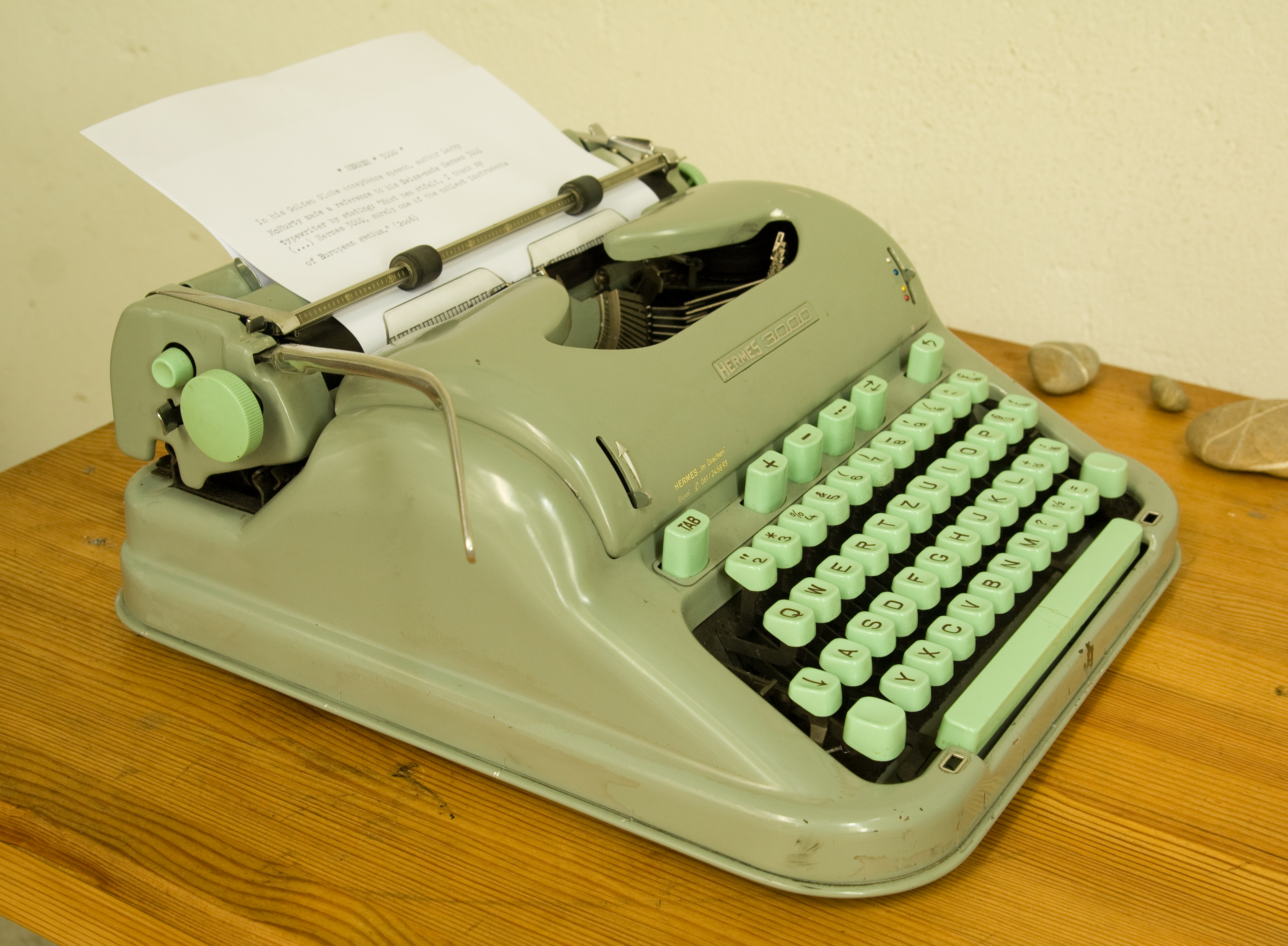 Hermes 3000 1st gen, "curvy"
Swiss whisper, the writer's quiet companion. Plath's Bell Jar, Kerouac's Vanity of Duluoz, McMurtry's everything.
for quiet writing
Hermes 3000 1st gen, "curvy"
Swiss whisper, the writer's quiet companion. Plath's Bell Jar, Kerouac's Vanity of Duluoz, McMurtry's everything.
for quiet writing
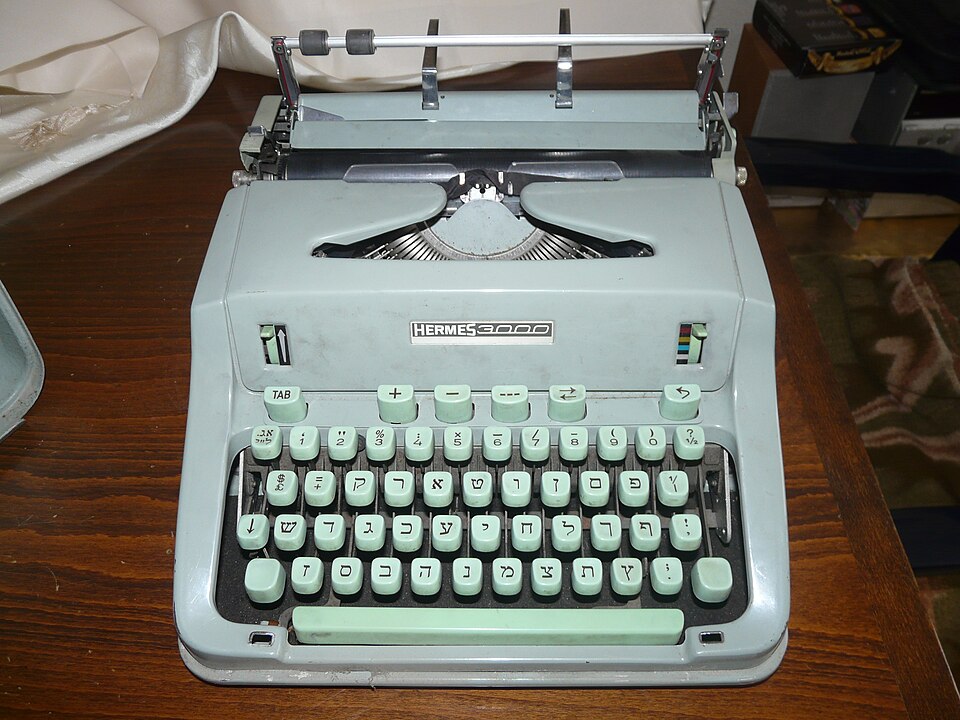 Hermes 3000 2nd gen, "boxy"
The squared metal 3000. Same mechanism inside a flatter shell.
for quiet writing
Hermes 3000 2nd gen, "boxy"
The squared metal 3000. Same mechanism inside a flatter shell.
for quiet writing
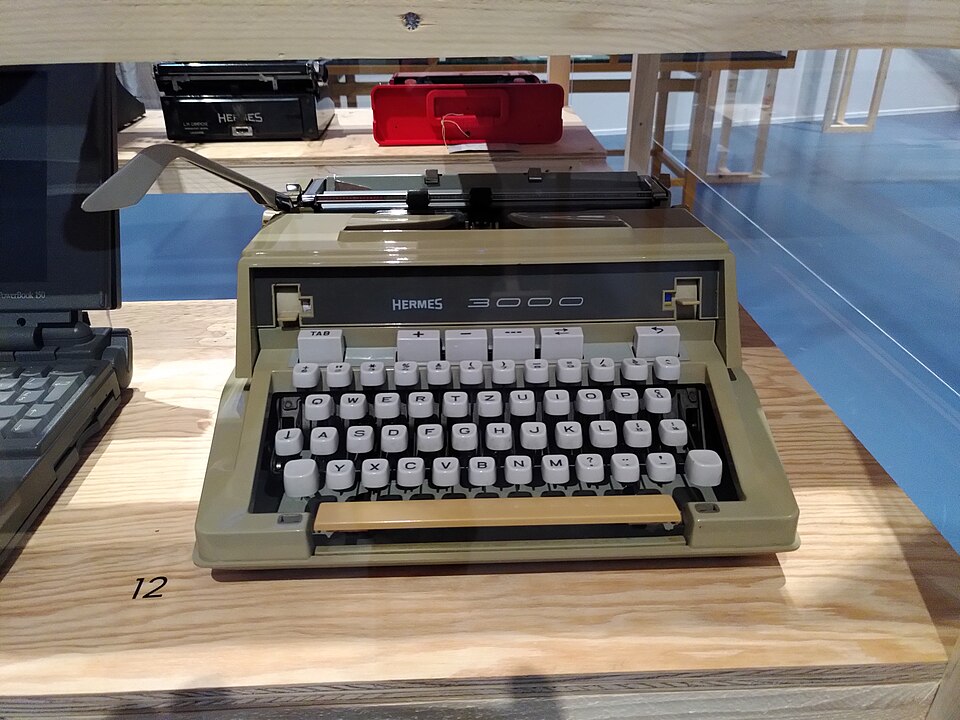 Hermes 3000 3rd gen, "squared"
The last 3000. Plastic shell, still the Hermes mechanism, and usually the cheapest way into the family.
for quiet writing
Hermes 3000 3rd gen, "squared"
The last 3000. Plastic shell, still the Hermes mechanism, and usually the cheapest way into the family.
for quiet writing
 Remington Noiseless Portable the compact one
The stenographer's whisper. Mechanically singular — uses thrust action instead of impact, so it actually delivers a quieter sound.
for quiet writing
Remington Noiseless Portable the compact one
The stenographer's whisper. Mechanically singular — uses thrust action instead of impact, so it actually delivers a quieter sound.
for quiet writing
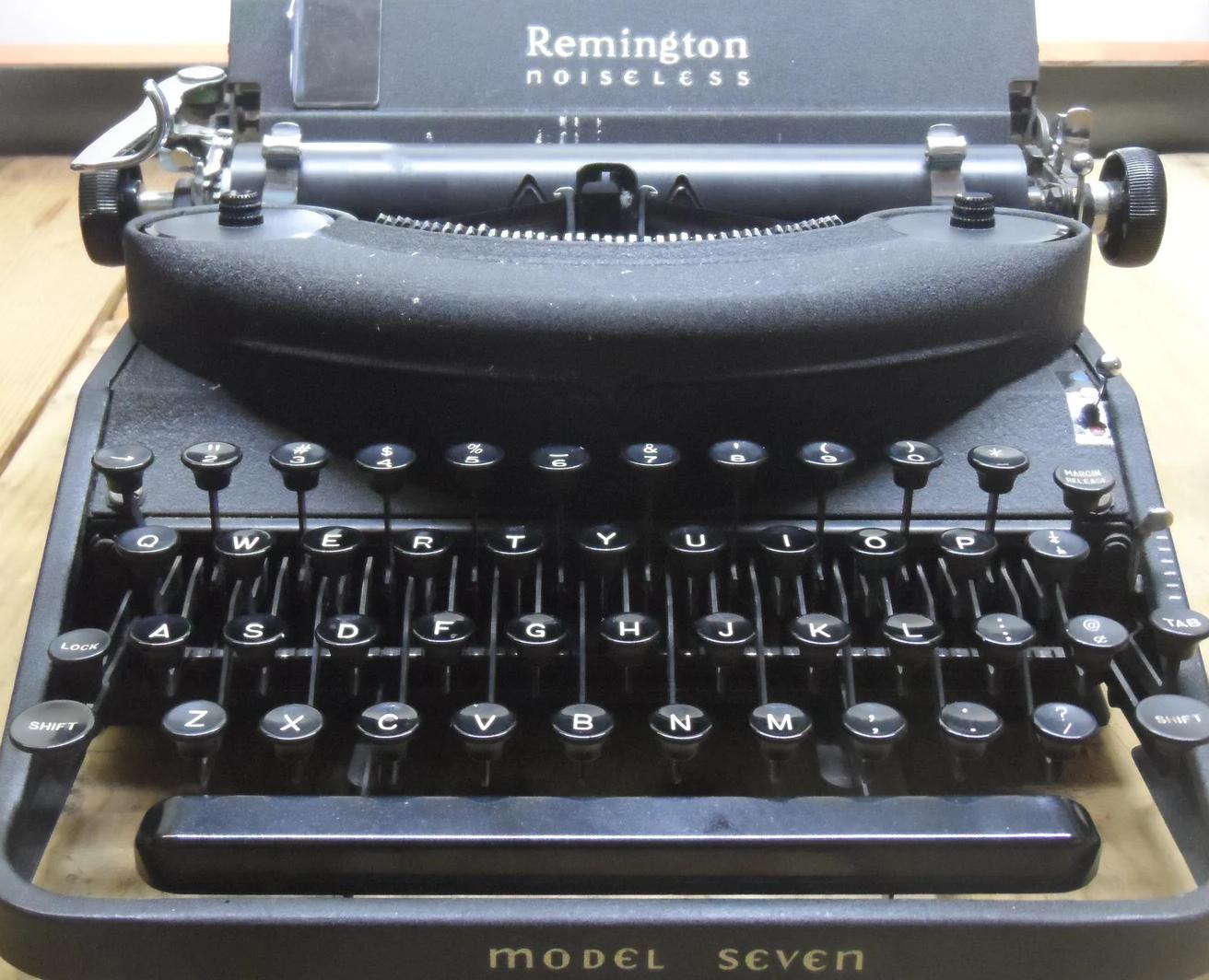 Remington Noiseless Model 7 big brother of the Noiseless Portable
The Noiseless Portable grown up: the same press-not-strike hush in a fuller body, with a paper table, a tabulator, and a speed mechanism that professionals and novelists leaned on for long quiet hours.
for quiet writing
Remington Noiseless Model 7 big brother of the Noiseless Portable
The Noiseless Portable grown up: the same press-not-strike hush in a fuller body, with a paper table, a tabulator, and a speed mechanism that professionals and novelists leaned on for long quiet hours.
for quiet writing
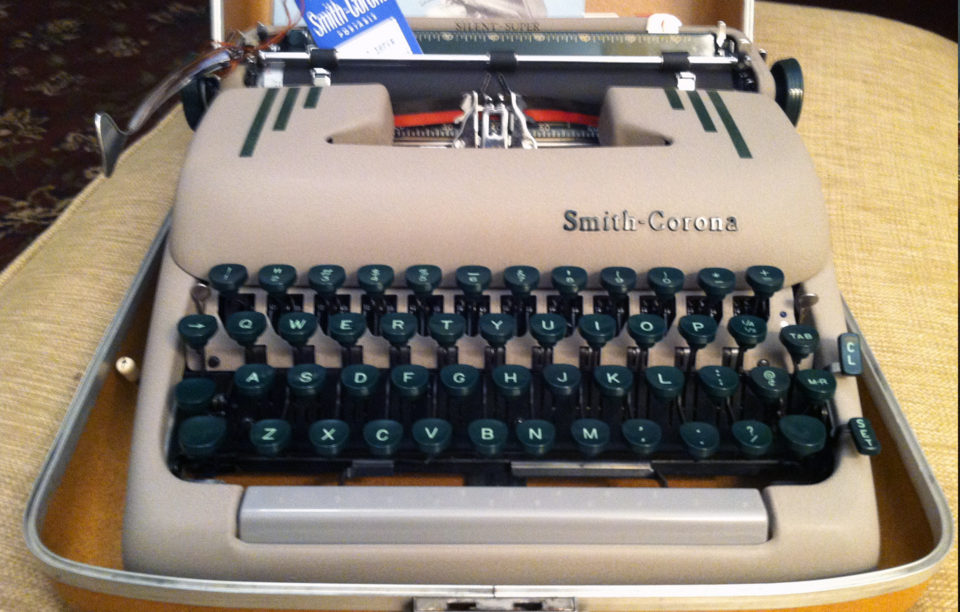 Smith-Corona Silent-Super
The Smith-Corona peak. Smooth, well-damped, refined — the American answer to the Hermes question.
for long sessions
Smith-Corona Silent-Super
The Smith-Corona peak. Smooth, well-damped, refined — the American answer to the Hermes question.
for long sessions
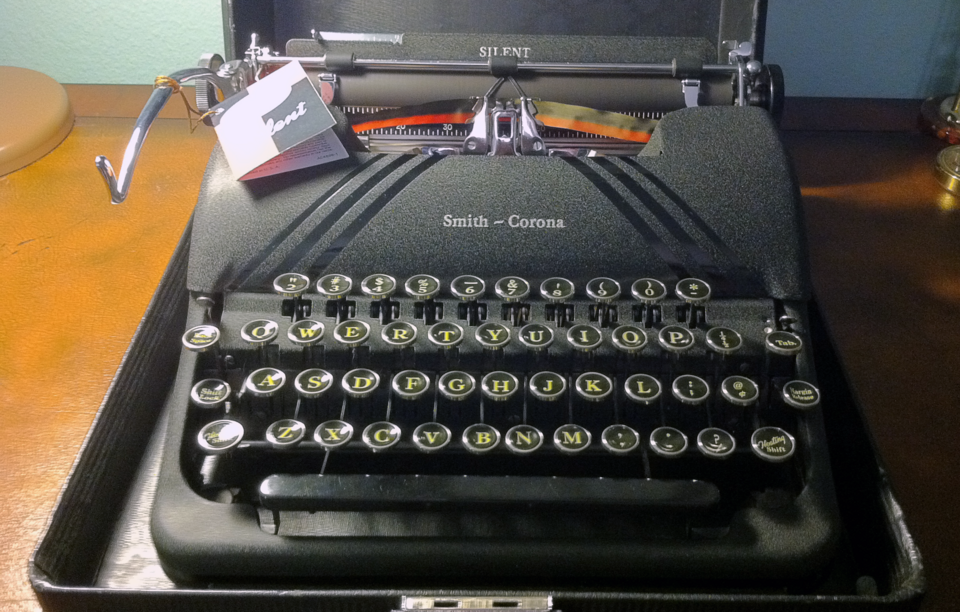 Smith-Corona Silent
American mid-century reliable. The portable that the Silent-Super refined.
for a first machine
Smith-Corona Silent
American mid-century reliable. The portable that the Silent-Super refined.
for a first machine
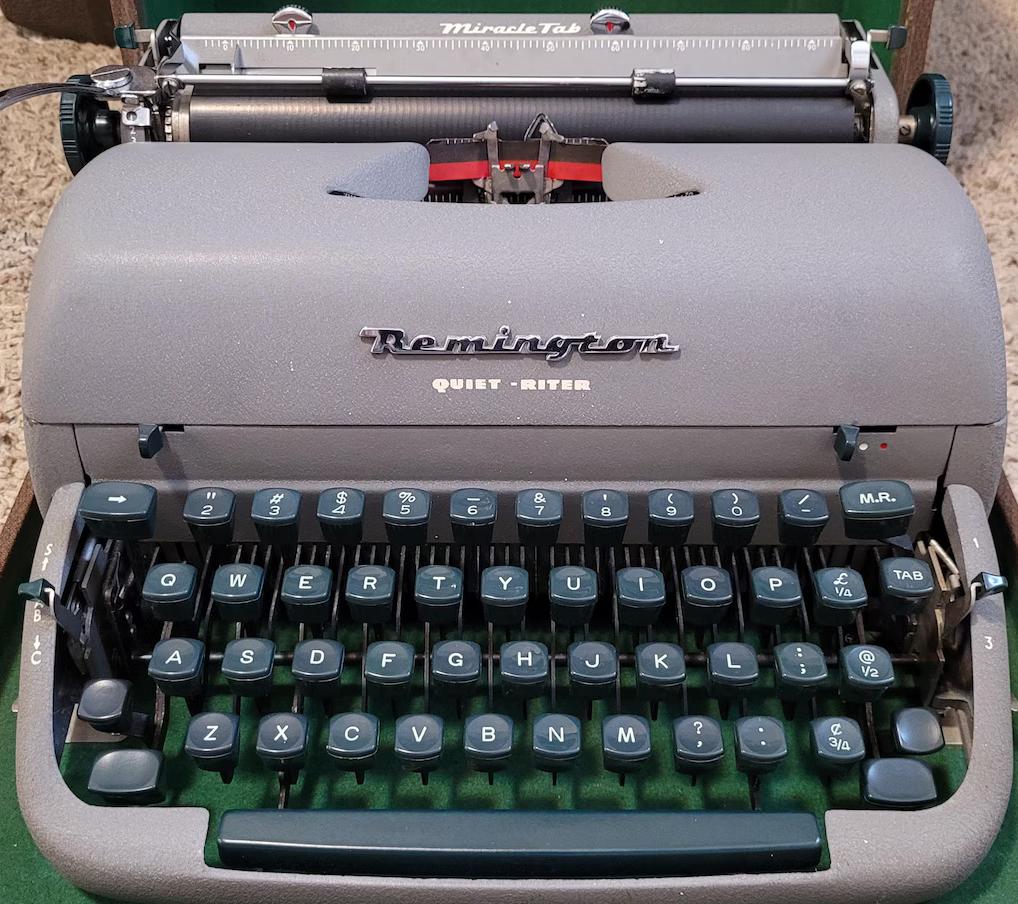 Remington Quiet-Riter
Postwar American quiet portable. Less mechanically remarkable than the prewar Noiseless, more refined as a daily-driver.
for quiet writing
Remington Quiet-Riter
Postwar American quiet portable. Less mechanically remarkable than the prewar Noiseless, more refined as a daily-driver.
for quiet writing
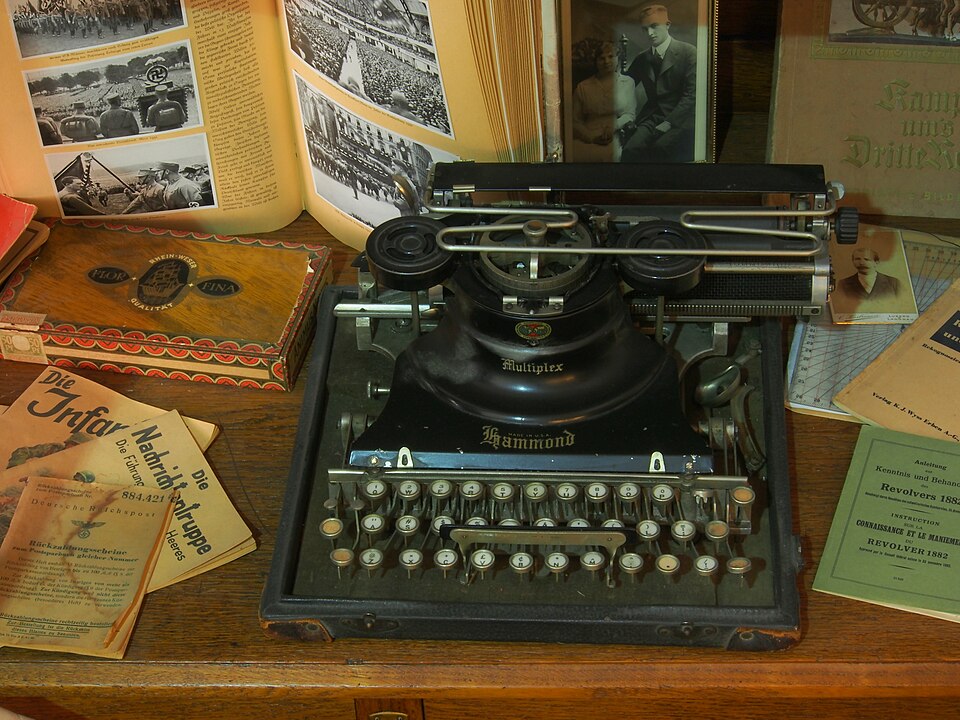 Hammond Multiplex the type-shuttle
No typebars and no shift in the usual sense: a swappable curved type-shuttle and a little hammer behind the paper, giving an unusually even impression and a font you could change at will.
for looks
Hammond Multiplex the type-shuttle
No typebars and no shift in the usual sense: a swappable curved type-shuttle and a little hammer behind the paper, giving an unusually even impression and a font you could change at will.
for looks
Snap / quick / bright
6 machinesSpringy machines that meet your fingers fast. Italian engineering and German ultraportables earn their living here.
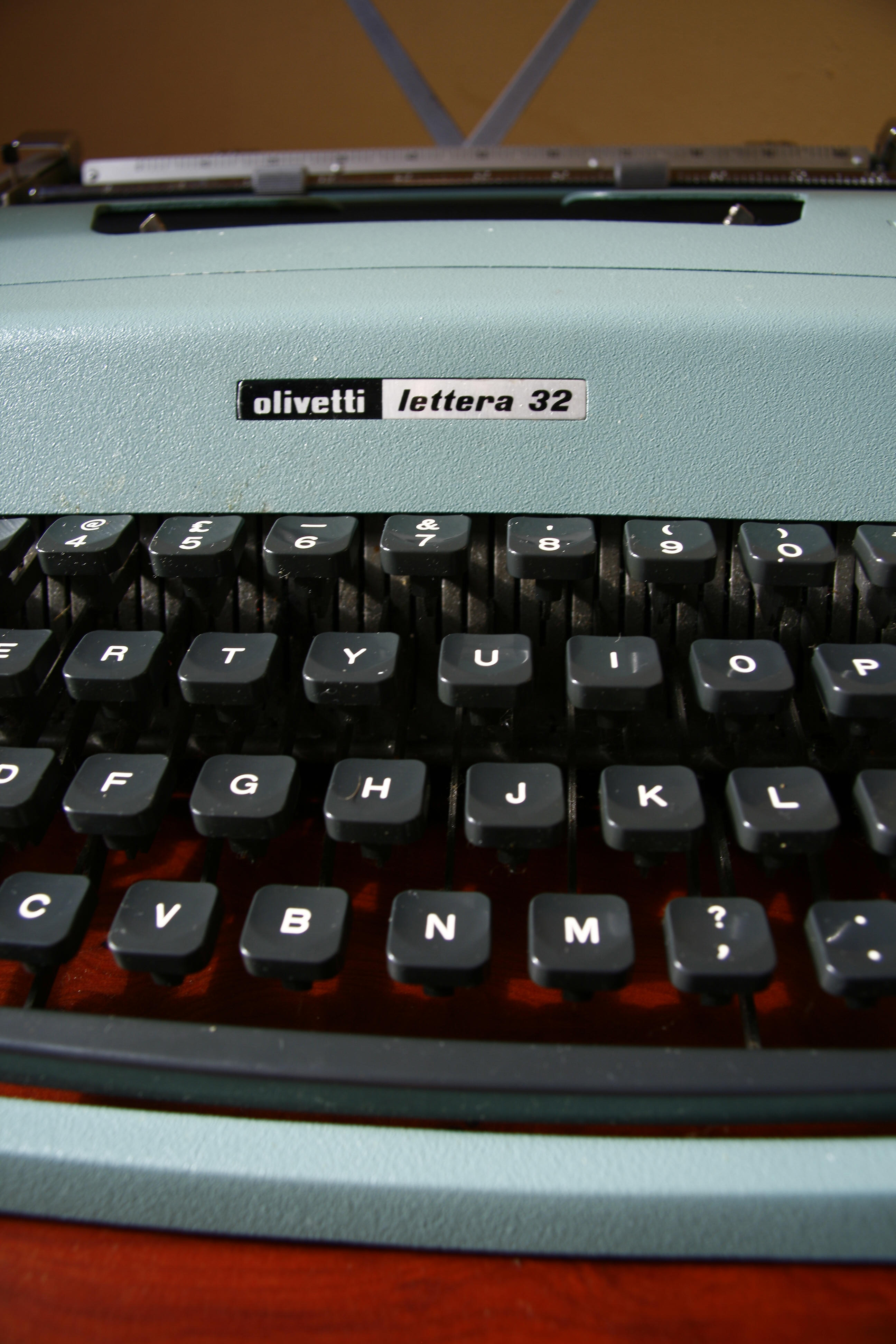 Olivetti Lettera 32
McCarthy's machine. Light, quick, tight-wire fast. Italian compact icon. He typed five million words on one over fifty years.
for looks
Olivetti Lettera 32
McCarthy's machine. Light, quick, tight-wire fast. Italian compact icon. He typed five million words on one over fifty years.
for looks
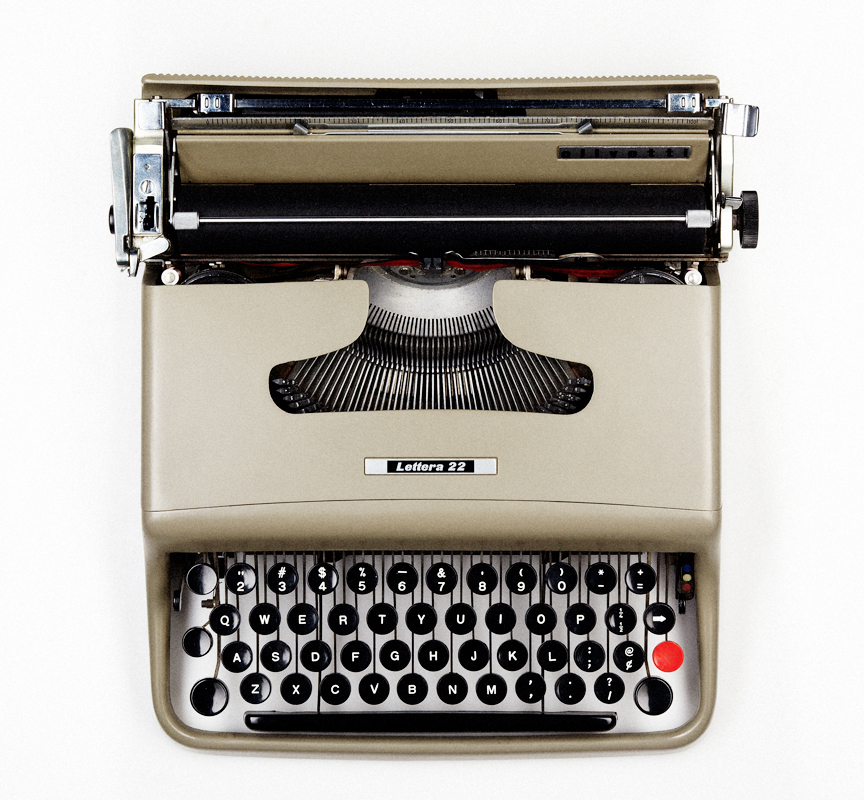 Olivetti Lettera 22
Nizzoli's design icon. The IIT named it the best-designed product of the previous century in 1959. Compasso d'Oro winner. Sculpted lightness.
for looks
Olivetti Lettera 22
Nizzoli's design icon. The IIT named it the best-designed product of the previous century in 1959. Compasso d'Oro winner. Sculpted lightness.
for looks
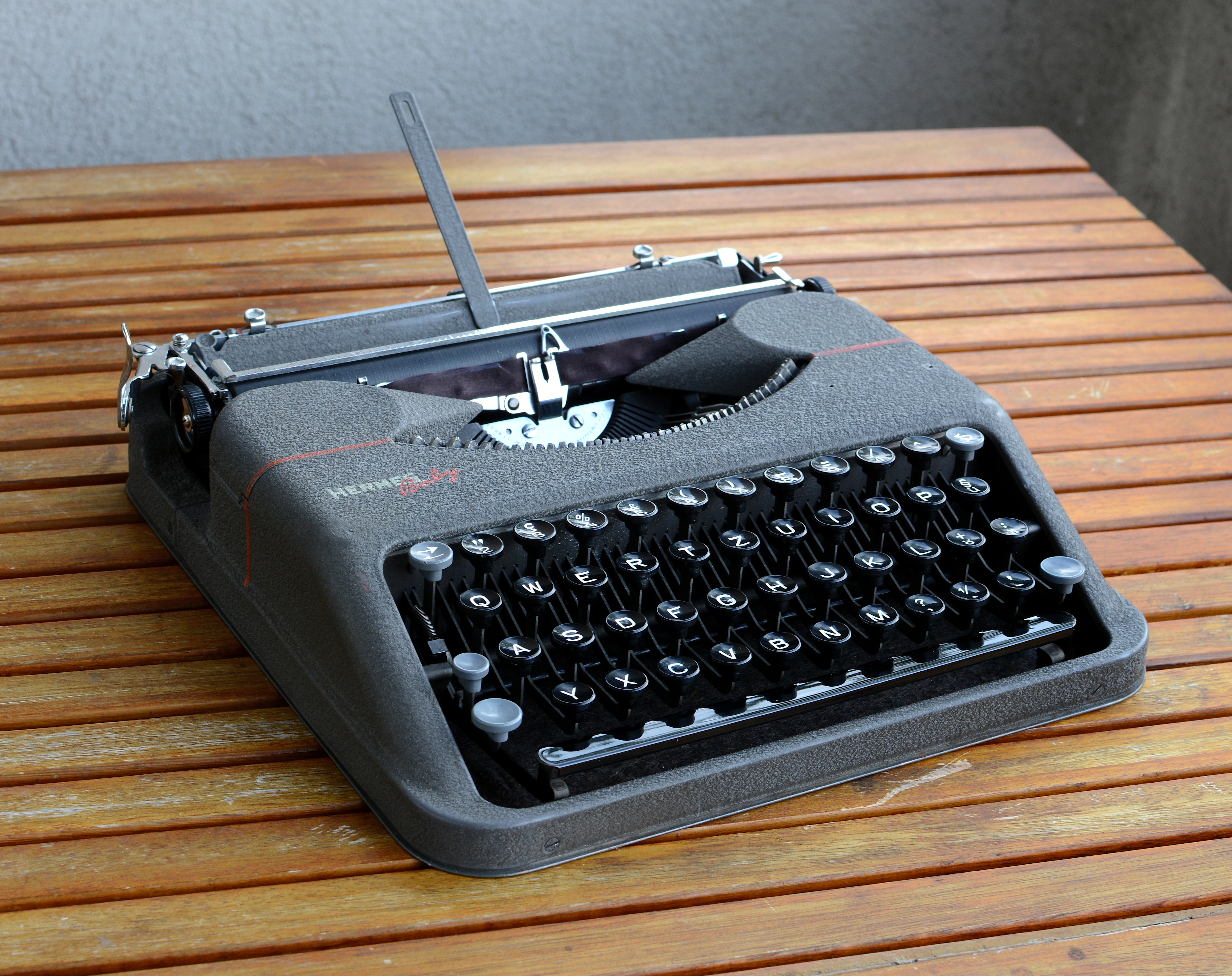 Hermes Baby / Rocket / Featherweight
Pocketable Swiss, the traveler's machine. Tilts its keyboard to shift — clever, characterful.
for travel
Hermes Baby / Rocket / Featherweight
Pocketable Swiss, the traveler's machine. Tilts its keyboard to shift — clever, characterful.
for travel
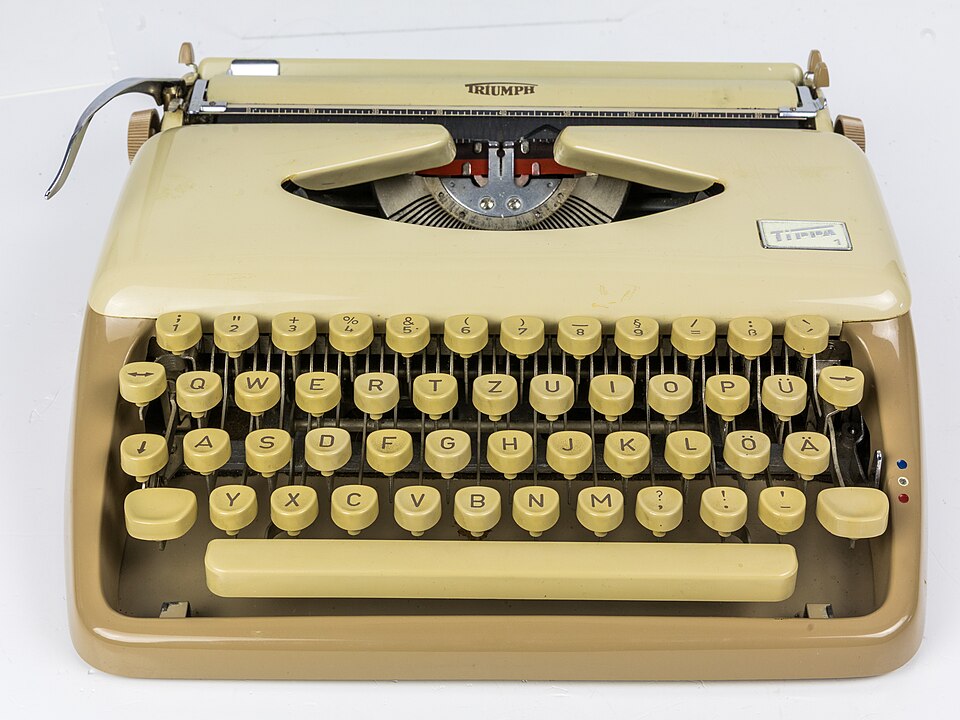 Adler / Triumph Tippa
German pocket workhorse. Slightly cramped for large hands but precise as a Swiss army knife.
for travel
Adler / Triumph Tippa
German pocket workhorse. Slightly cramped for large hands but precise as a Swiss army knife.
for travel
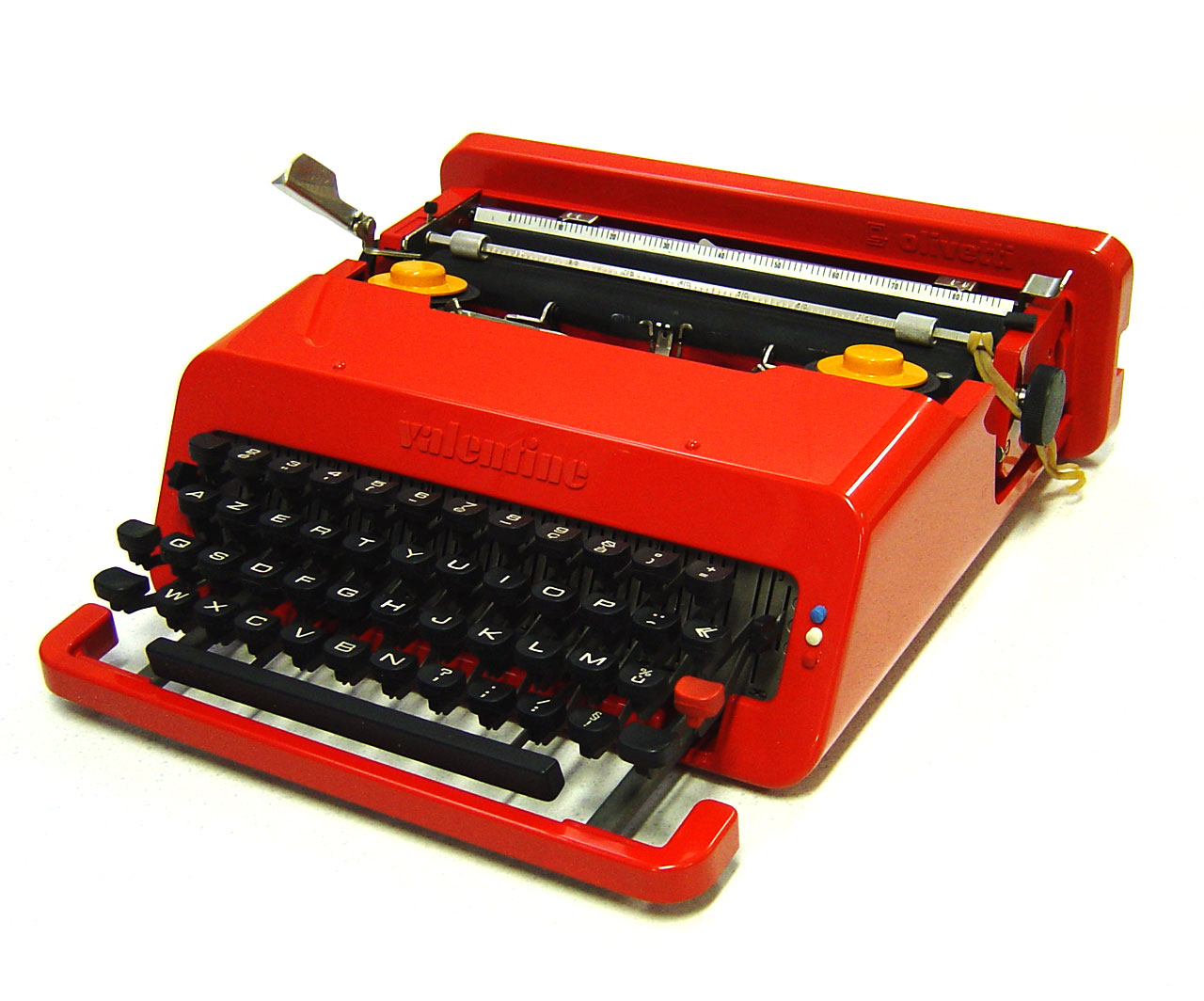 Olivetti Valentine
Ettore Sottsass's red object. Lettera 32 internals dressed in glossy plastic.
for looks
Olivetti Valentine
Ettore Sottsass's red object. Lettera 32 internals dressed in glossy plastic.
for looks
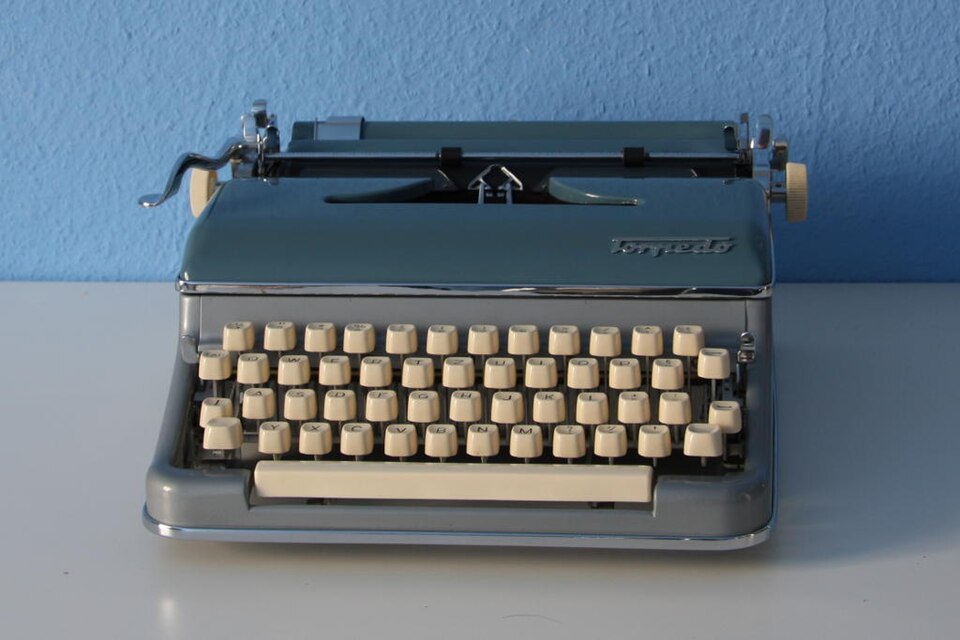 Torpedo 18
The German portable people compare to the Olympia SM3, with a basket shift instead of a moving carriage.
for long sessions
Torpedo 18
The German portable people compare to the Olympia SM3, with a basket shift instead of a moving carriage.
for long sessions
Workhorse precision
25 machinesThe middle distance. These are the machines that turn out a thousand pages a year without complaint, built to outlast the room they sit in.
Hermes 3000 1st gen, "curvy"
Swiss whisper, the writer's quiet companion. Plath's Bell Jar, Kerouac's Vanity of Duluoz, McMurtry's everything.
for quiet writing
Hermes 3000 2nd gen, "boxy"
The squared metal 3000. Same mechanism inside a flatter shell.
for quiet writing
Hermes 3000 3rd gen, "squared"
The last 3000. Plastic shell, still the Hermes mechanism, and usually the cheapest way into the family.
for quiet writing
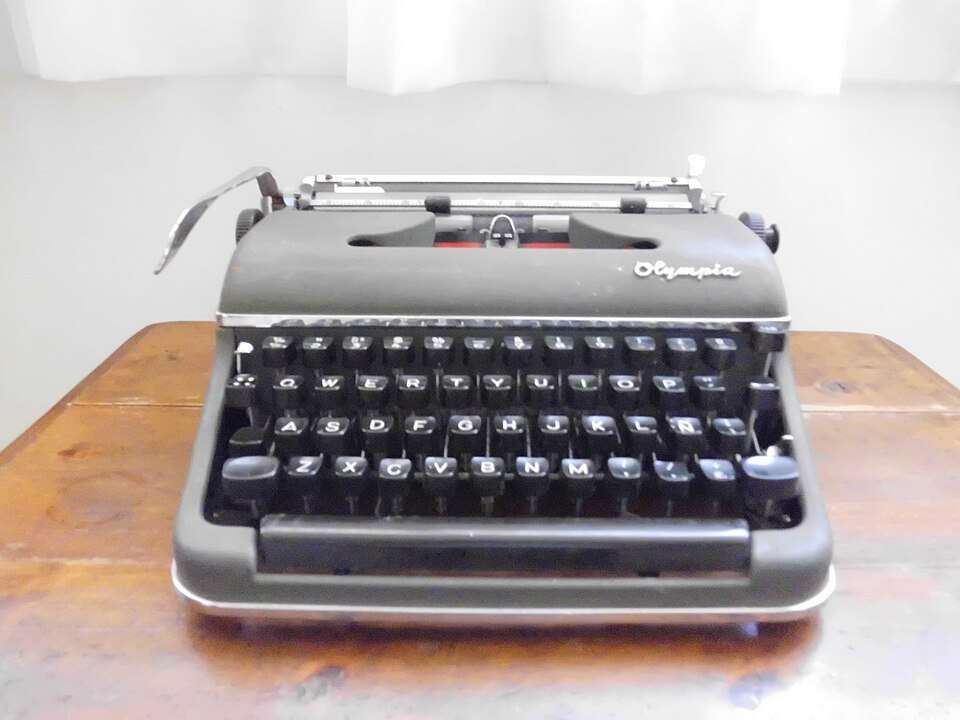 Olympia SM3
German precision workhorse. Called the Mercedes-Benz of typewriters in its day. Bulletproof. Carriage-shifted, decisive.
for long sessions
Olympia SM3
German precision workhorse. Called the Mercedes-Benz of typewriters in its day. Bulletproof. Carriage-shifted, decisive.
for long sessions
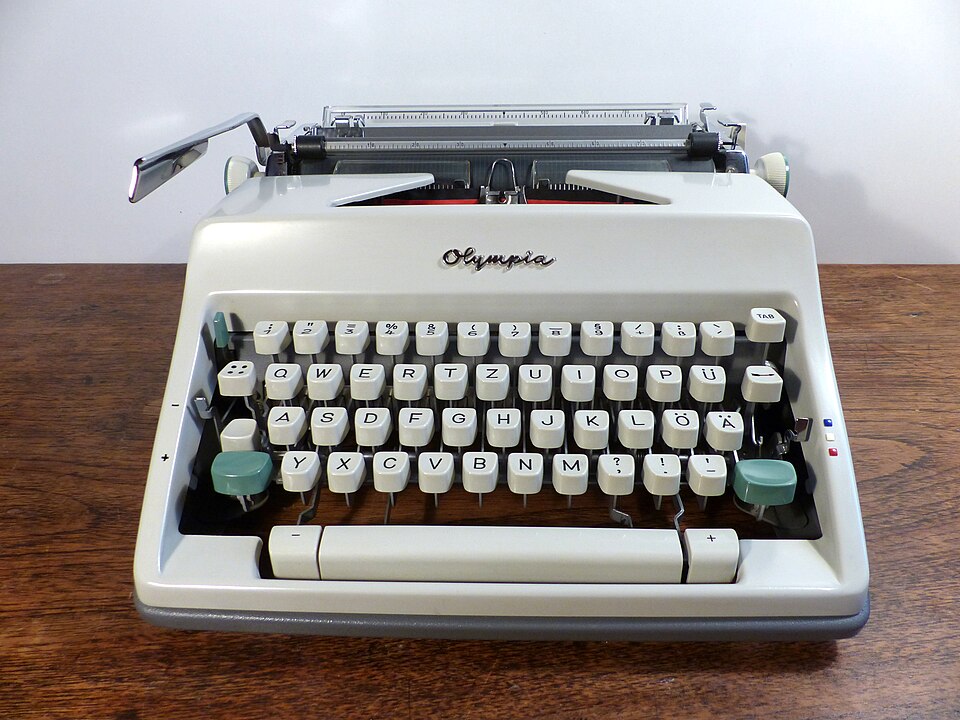 Olympia SM9
The "plain vanilla but perfect" working writer. Olympia finally went basket-shift. It's fast with light keys that give little resistance.
for long sessions
Olympia SM9
The "plain vanilla but perfect" working writer. Olympia finally went basket-shift. It's fast with light keys that give little resistance.
for long sessions
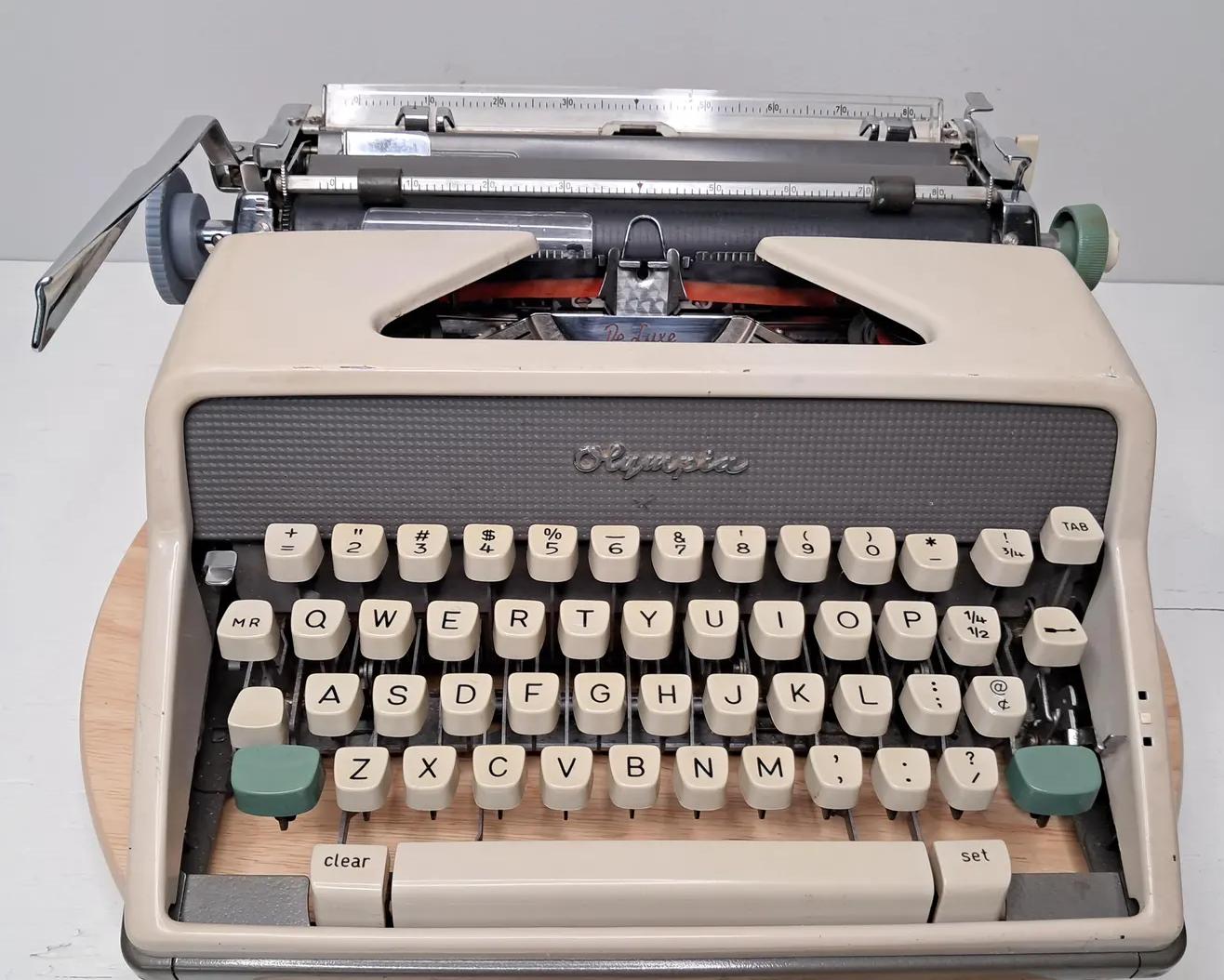 Olympia SM7
The SM3 polished, the SM9 not yet arrived. Transitional sweet spot for collectors who want the carriage shift with later refinements.
for long sessions
Olympia SM7
The SM3 polished, the SM9 not yet arrived. Transitional sweet spot for collectors who want the carriage shift with later refinements.
for long sessions
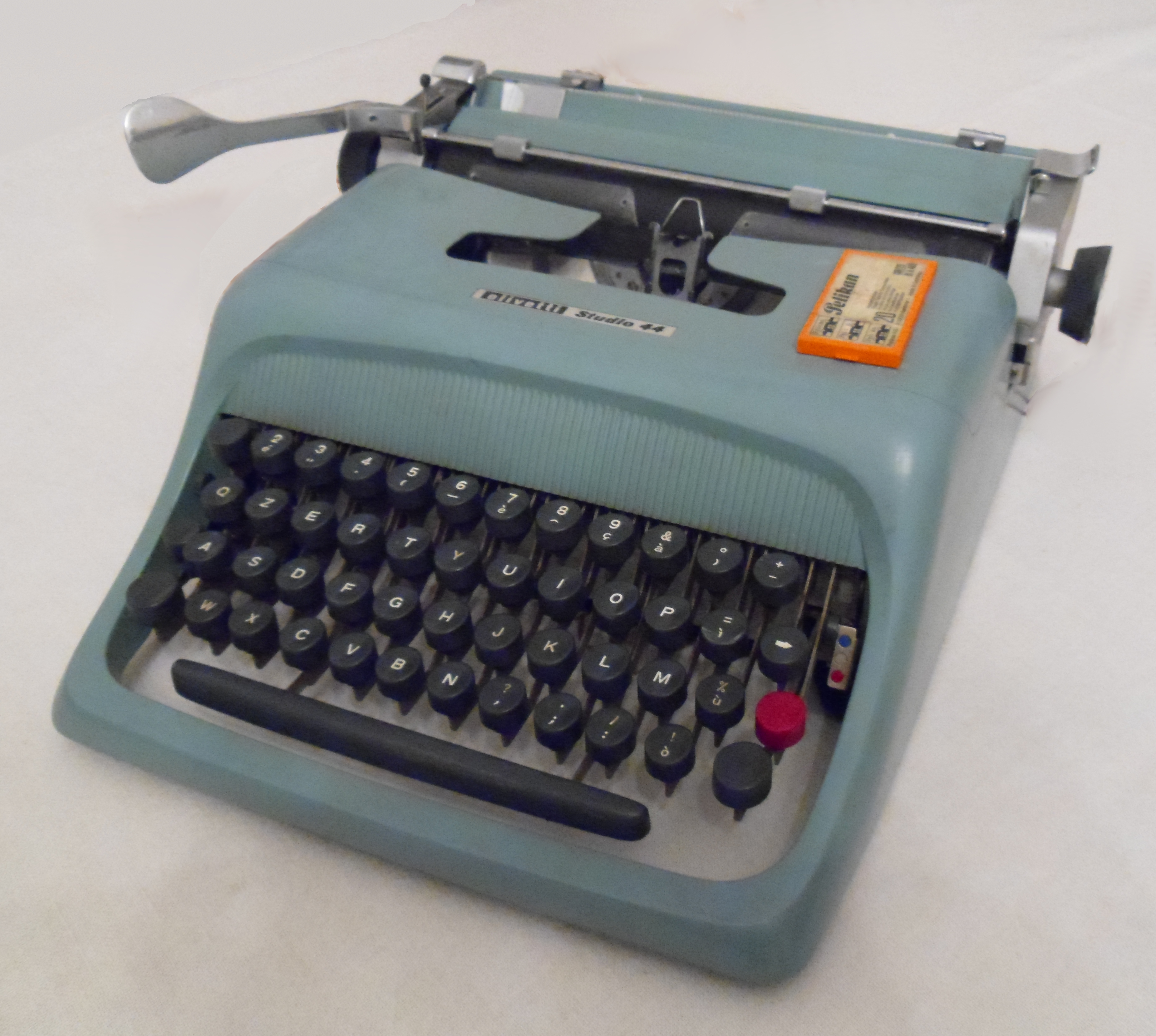 Olivetti Studio 44
Italian semi-standard. Sometimes called the best Olivetti for writers — more substance than the Letteras, more springy than a standard.
for long sessions
Olivetti Studio 44
Italian semi-standard. Sometimes called the best Olivetti for writers — more substance than the Letteras, more springy than a standard.
for long sessions
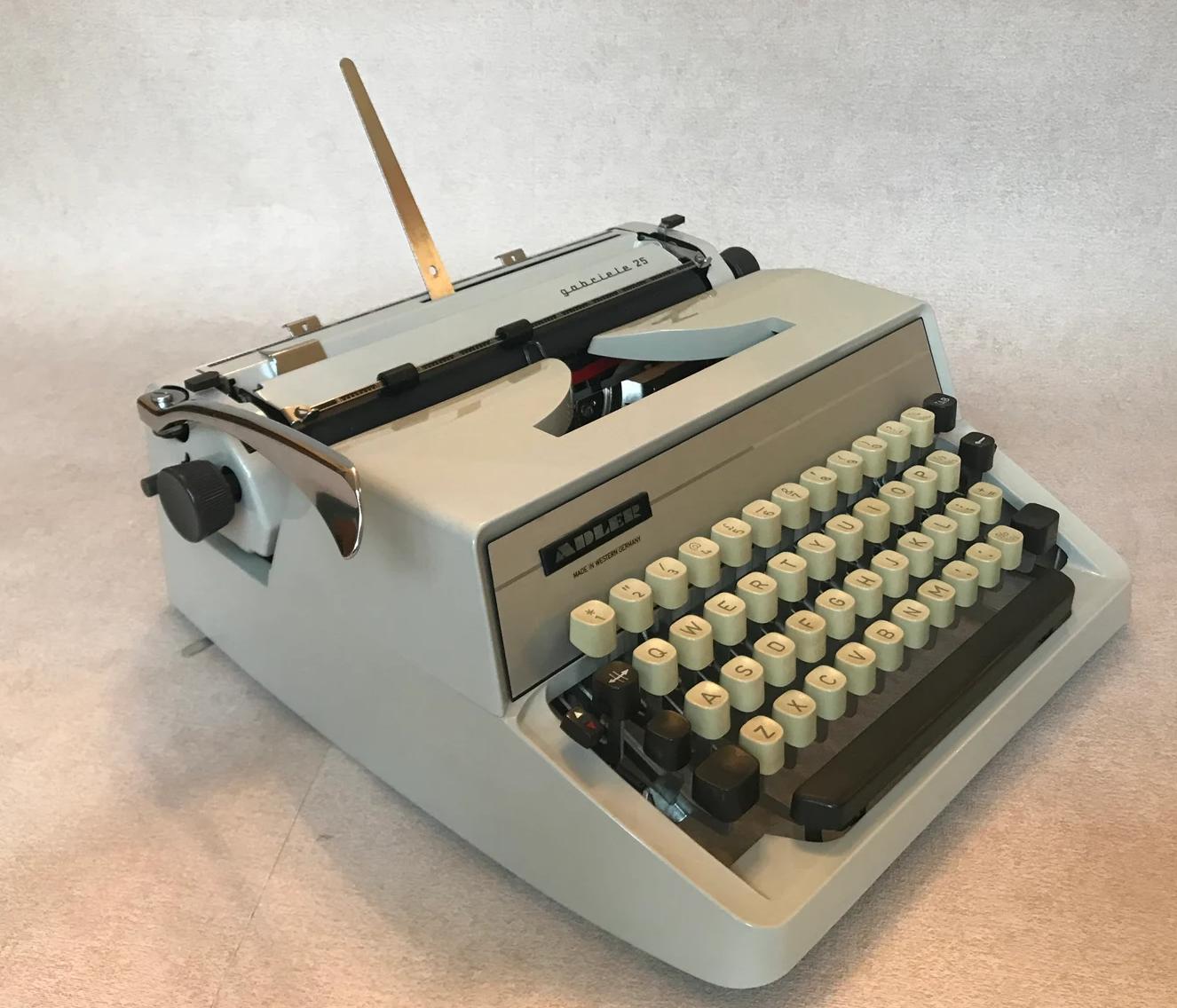 Adler Gabriele 25 / 35
German portable, often highly recommended. Overlooked because it isn't an Olympia.
for long sessions
Adler Gabriele 25 / 35
German portable, often highly recommended. Overlooked because it isn't an Olympia.
for long sessions
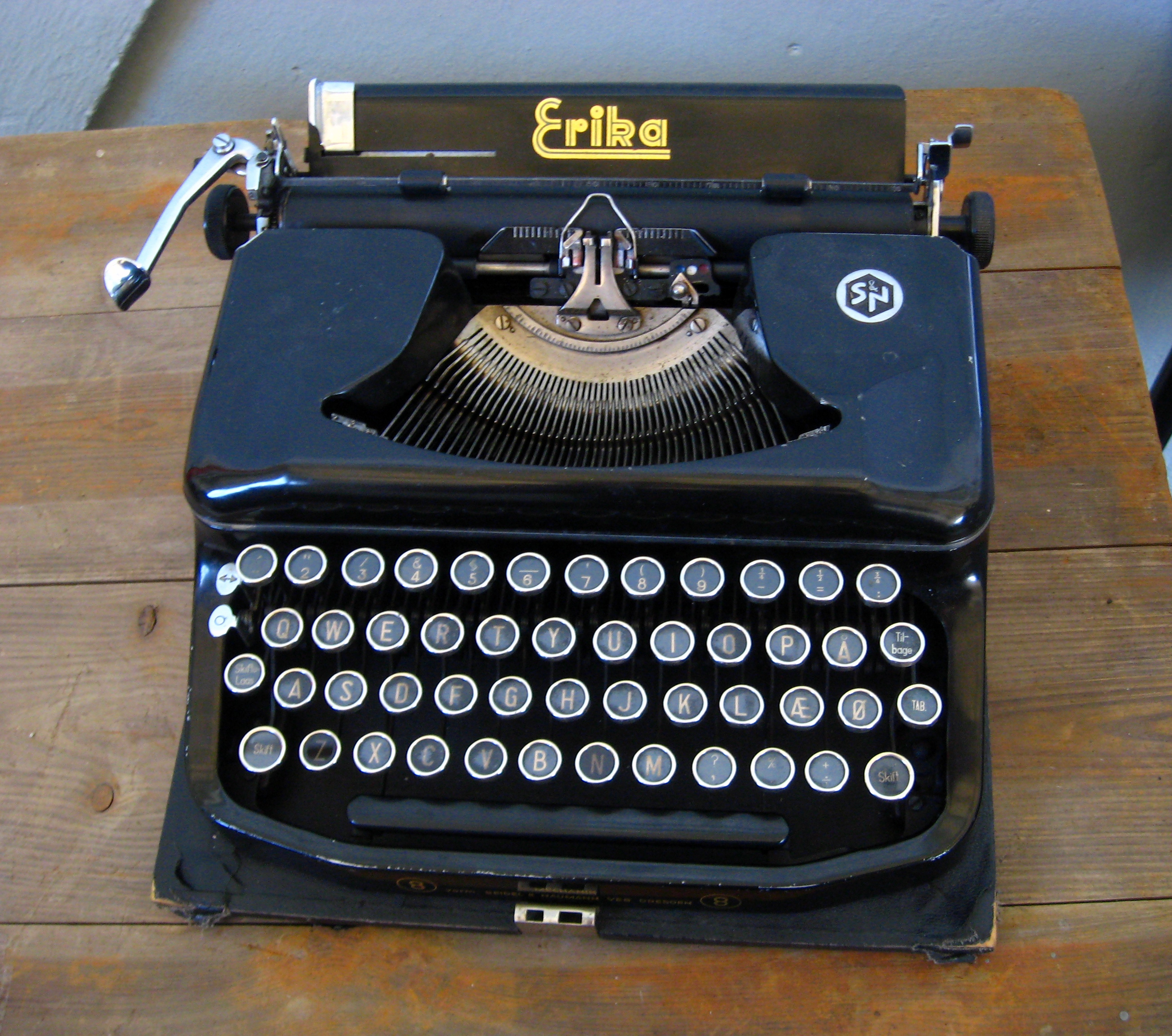 Erika (5, 10, Model 100)
East German quality.
for long sessions
Erika (5, 10, Model 100)
East German quality.
for long sessions
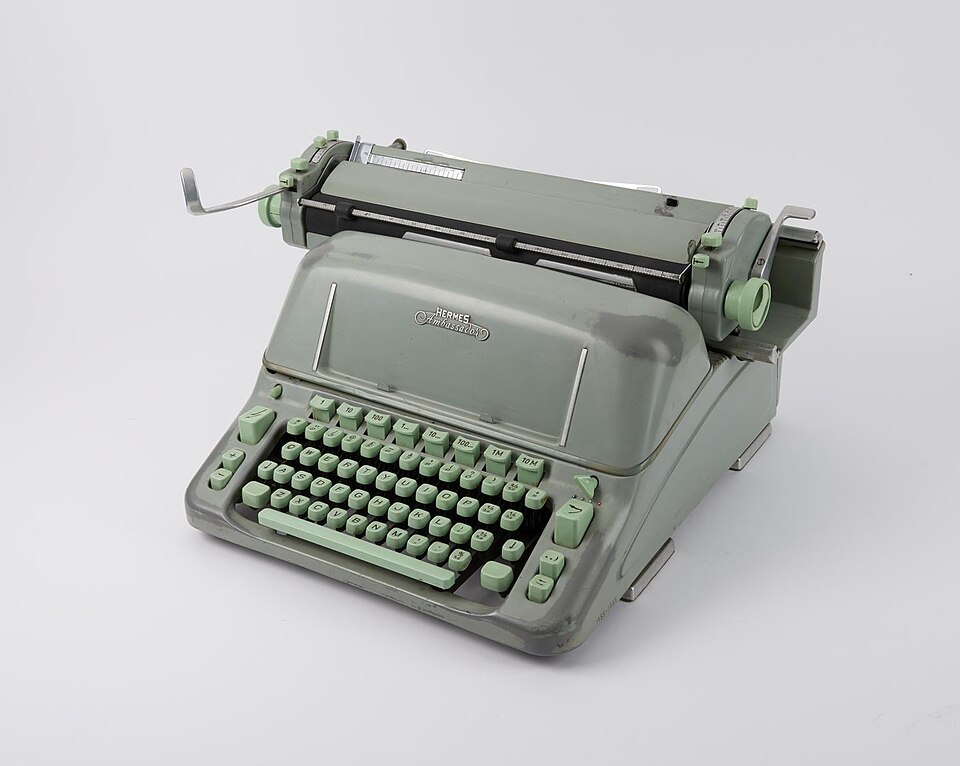 Hermes Ambassador the heaviest portable, the lightest standard
the bank vault that types
Hermes Ambassador the heaviest portable, the lightest standard
the bank vault that types
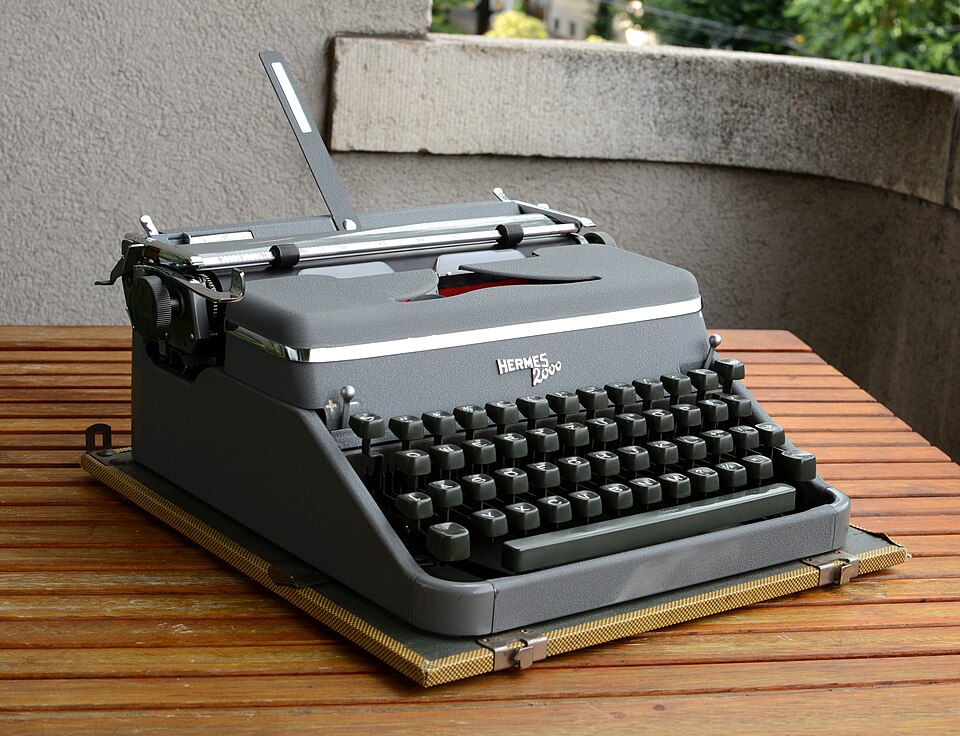 Hermes 2000 the pre-3000 flagship
the older, sharper sibling
Hermes 2000 the pre-3000 flagship
the older, sharper sibling
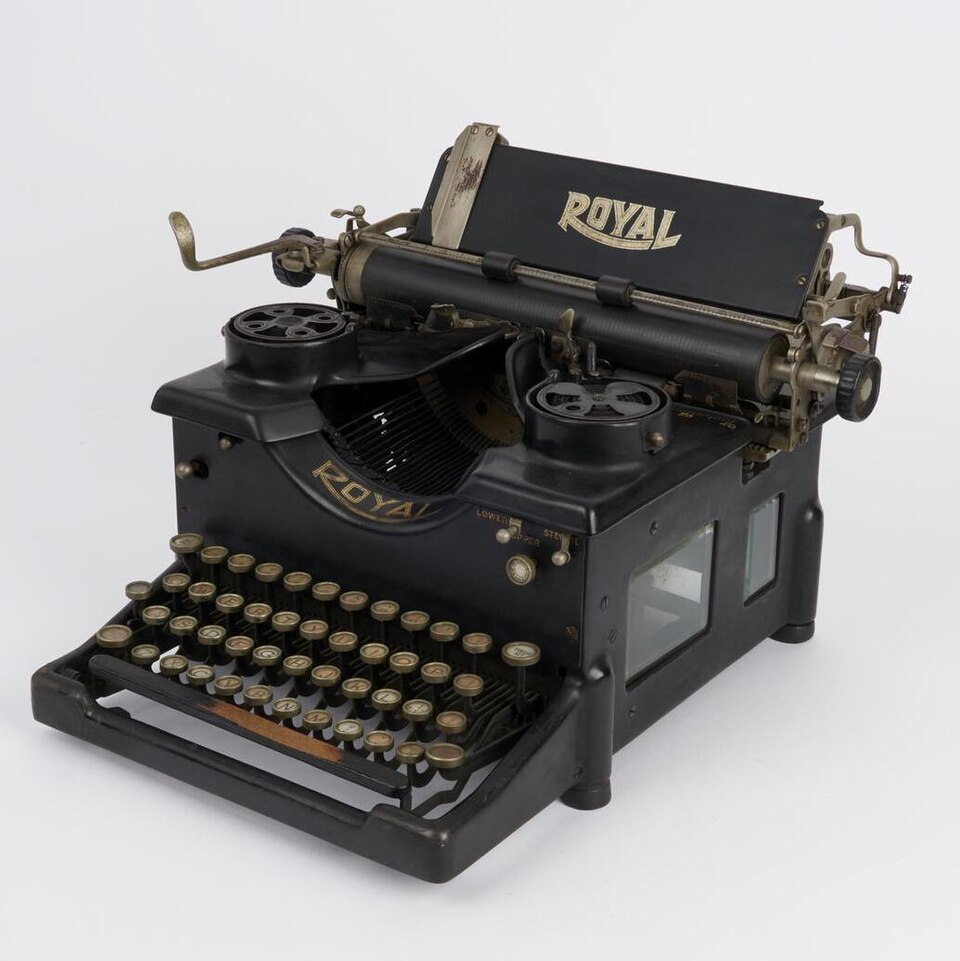 Royal 10 the glass-paneled standard
the office machine your grandfather typed his letters on
Royal 10 the glass-paneled standard
the office machine your grandfather typed his letters on
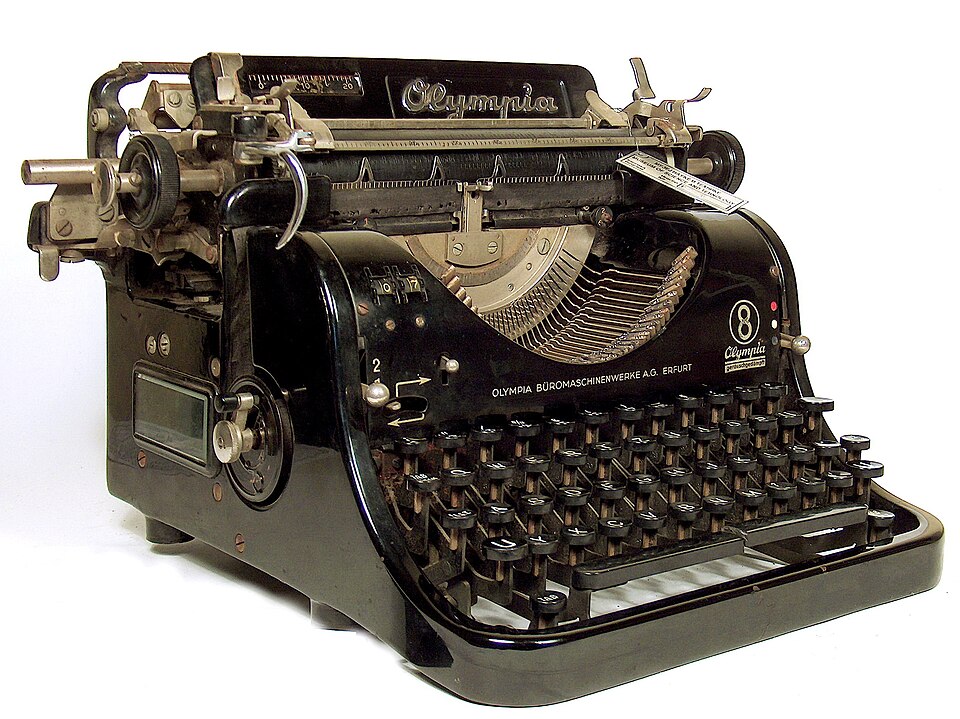 Olympia Model 8 the postwar German standard
the SG's quieter predecessor
Olympia Model 8 the postwar German standard
the SG's quieter predecessor
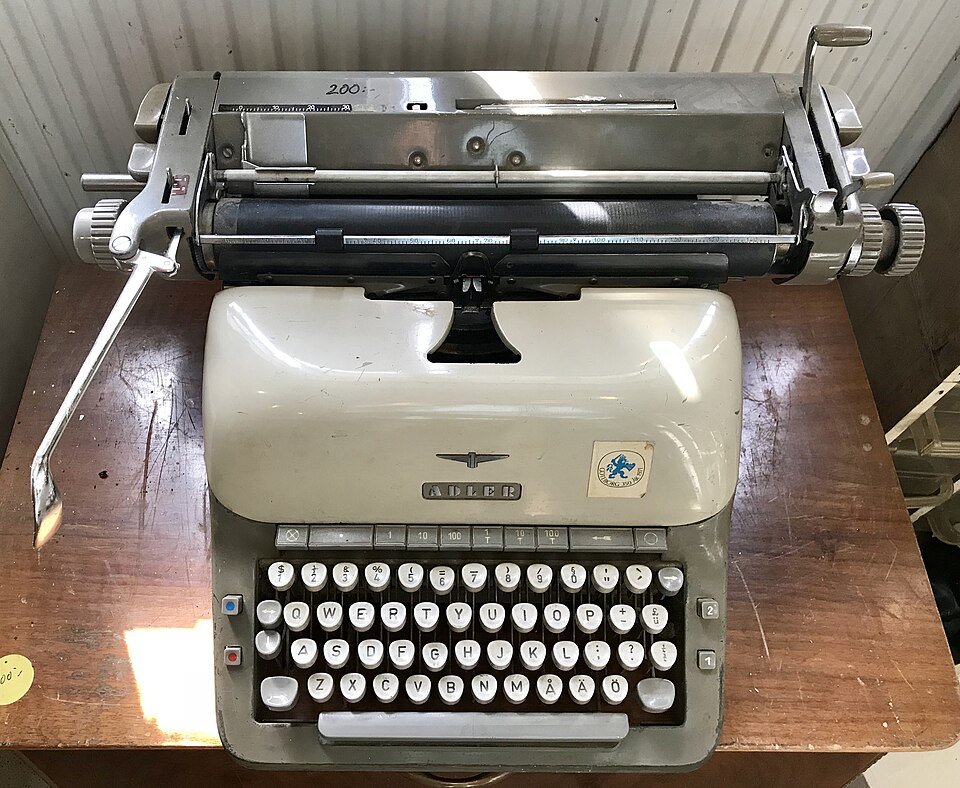 Adler Universal the German office standard
Olympia SG's rival
Adler Universal the German office standard
Olympia SG's rival
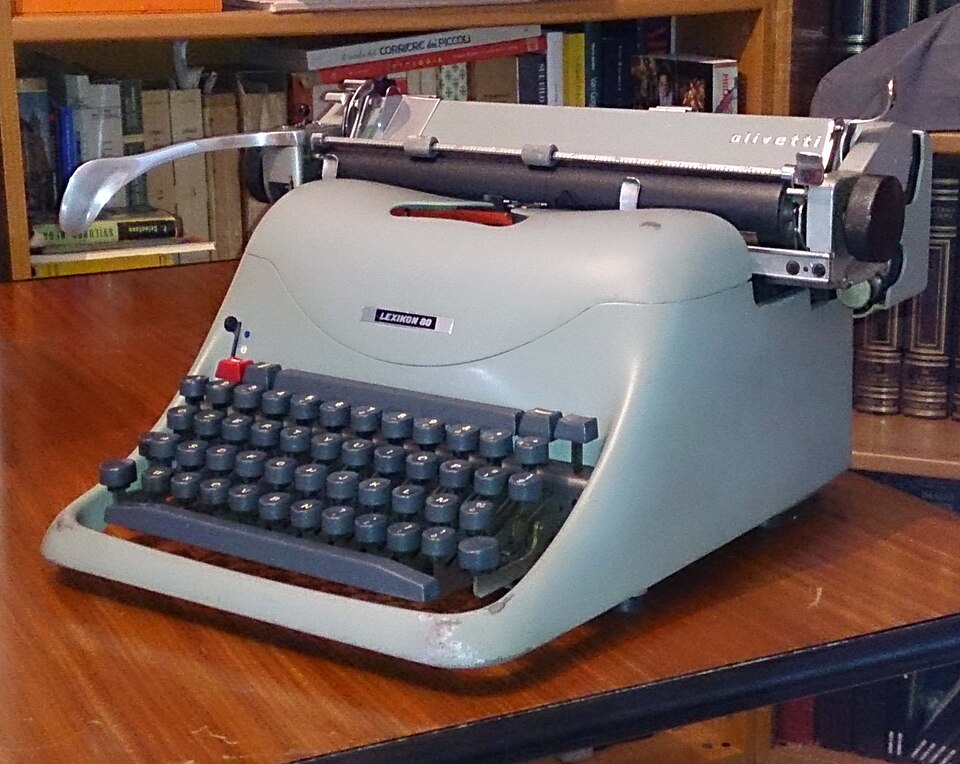 Olivetti Lexikon 80 the Italian office showpiece
office work as beautiful object
Olivetti Lexikon 80 the Italian office showpiece
office work as beautiful object
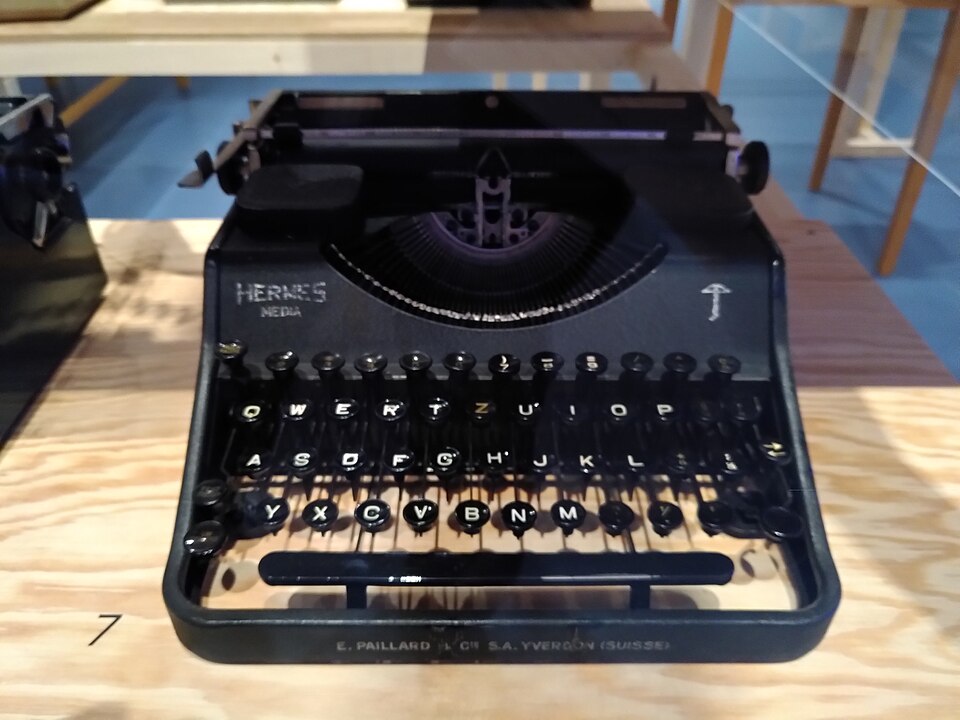 Hermes Media the mid-size Swiss between Baby and 3000
the one that gets overlooked
Hermes Media the mid-size Swiss between Baby and 3000
the one that gets overlooked
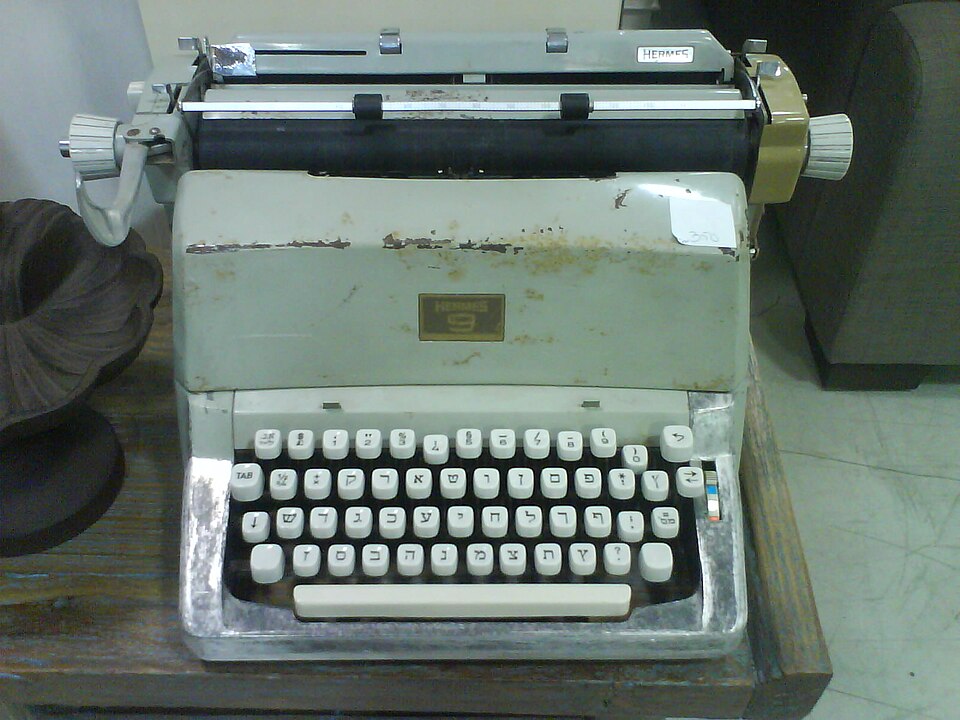 Hermes 9 the office Hermes
the Ambassador's sister
Hermes 9 the office Hermes
the Ambassador's sister
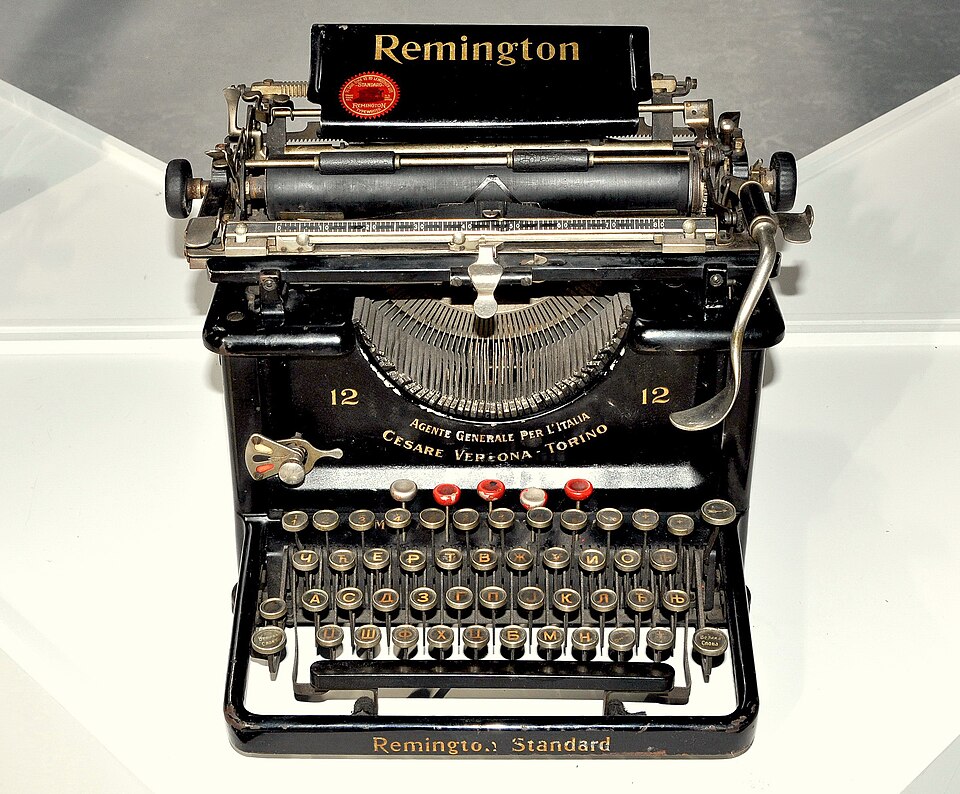 Remington No. 12 the schoolhouse standard
the office standard
Remington No. 12 the schoolhouse standard
the office standard
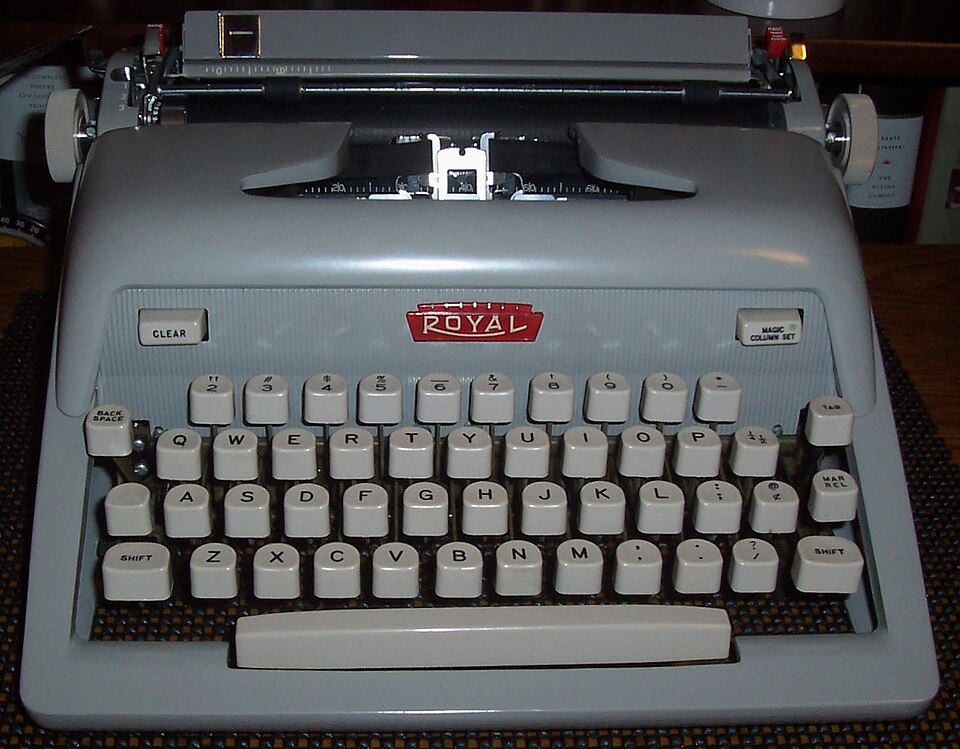 Royal Futura 600
what the QDL grew up into
for long sessions
Royal Futura 600
what the QDL grew up into
for long sessions
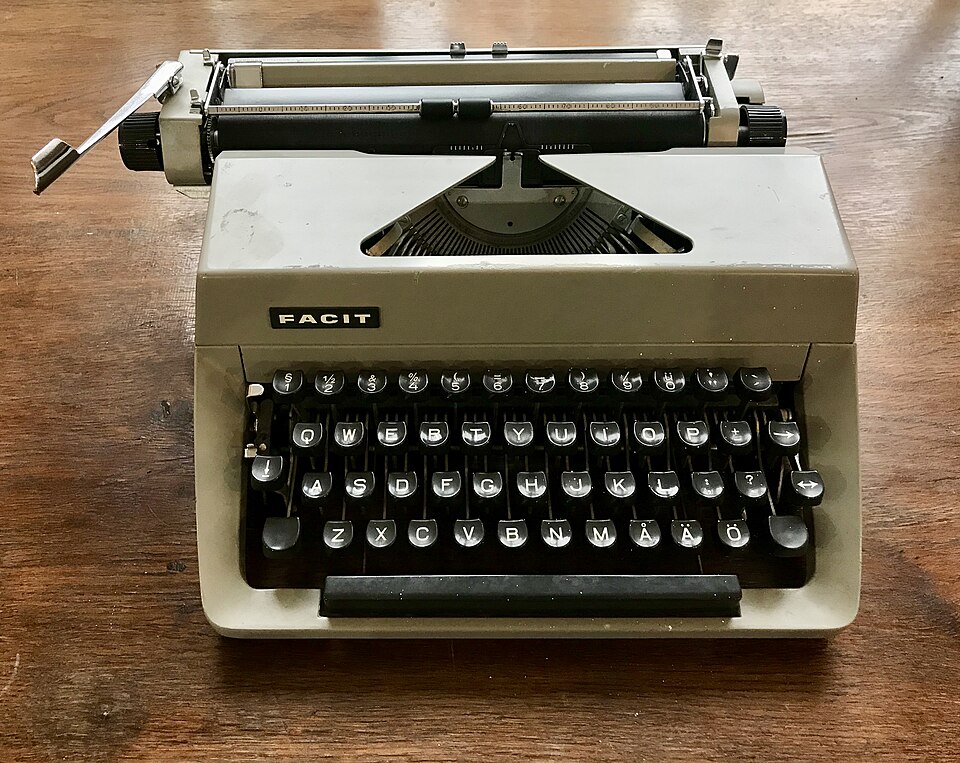 Facit TP1 the Swedish prince
Swedish steel and a designer's restraint. Understated, light to the hand, and built to office standards in a portable shell.
for long sessions
Torpedo 18
The German portable people compare to the Olympia SM3, with a basket shift instead of a moving carriage.
for long sessions
Facit TP1 the Swedish prince
Swedish steel and a designer's restraint. Understated, light to the hand, and built to office standards in a portable shell.
for long sessions
Torpedo 18
The German portable people compare to the Olympia SM3, with a basket shift instead of a moving carriage.
for long sessions
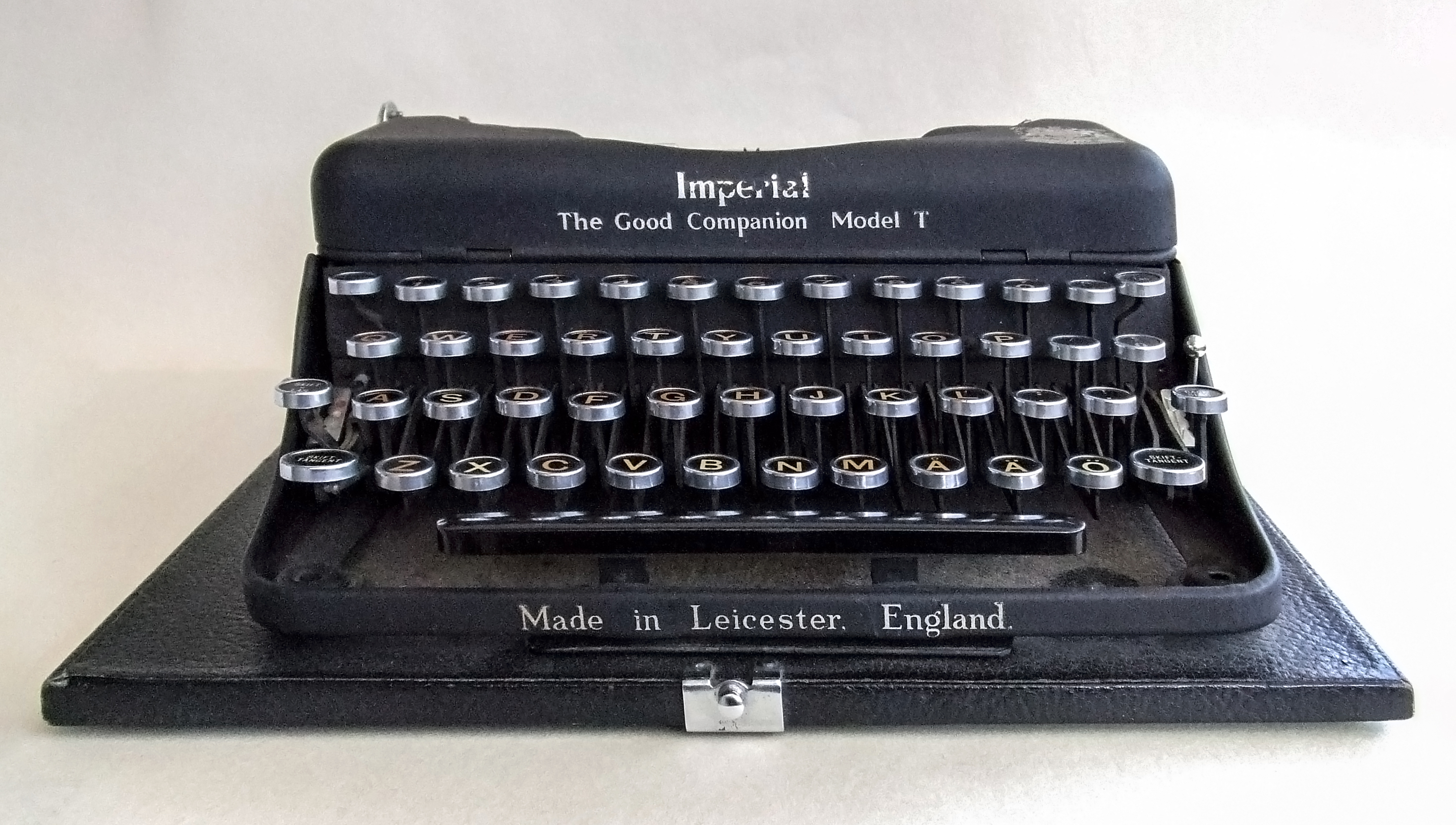 Imperial Good Companion the British one
Britain's long-running portable, named after a Priestley novel and once sold By Royal Appointment. Solid, snappy, and built to outlast its owner.
for long sessions
Imperial Good Companion the British one
Britain's long-running portable, named after a Priestley novel and once sold By Royal Appointment. Solid, snappy, and built to outlast its owner.
for long sessions
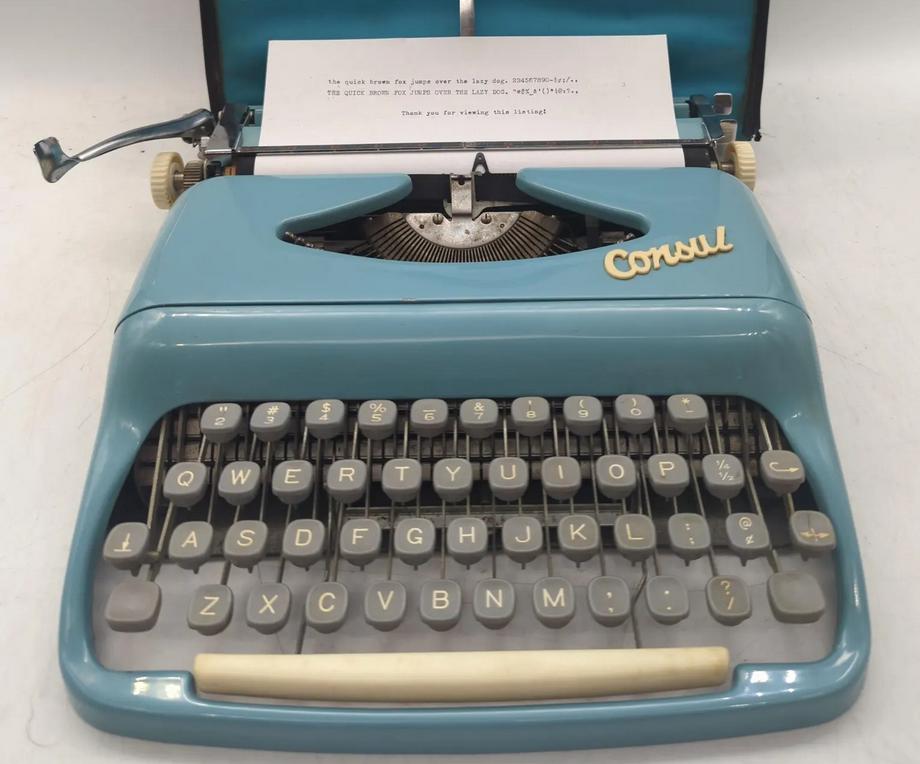 Consul the Czech sleeper
Made by a Czech arms factory, exported under a dozen names, and quietly better built than its price ever suggested.
for long sessions
Consul the Czech sleeper
Made by a Czech arms factory, exported under a dozen names, and quietly better built than its price ever suggested.
for long sessions
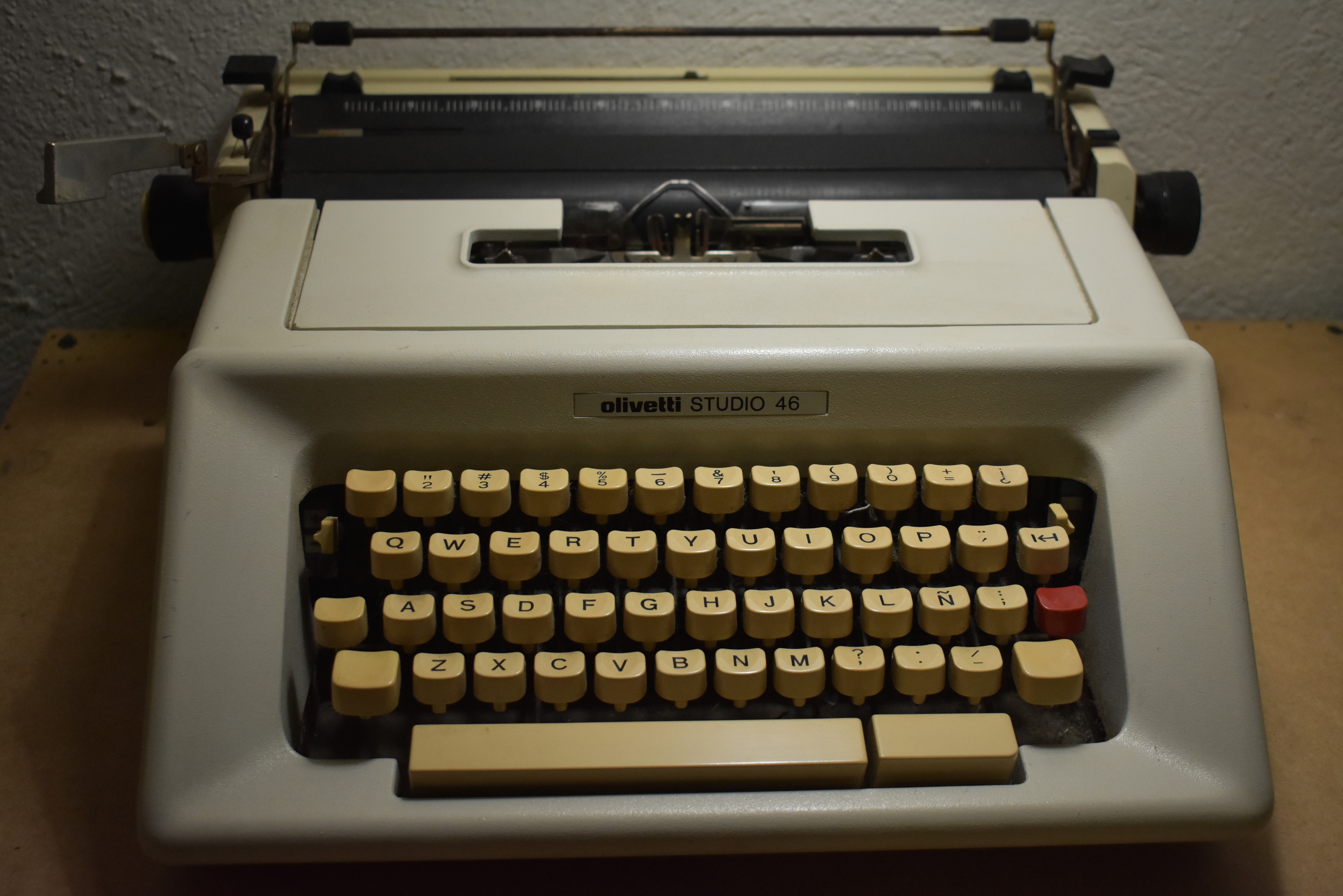 Olivetti Studio 46
The bigger, plainer Olivetti, a semi-standard portable for people who write a lot.
for long sessions
Olivetti Studio 46
The bigger, plainer Olivetti, a semi-standard portable for people who write a lot.
for long sessions
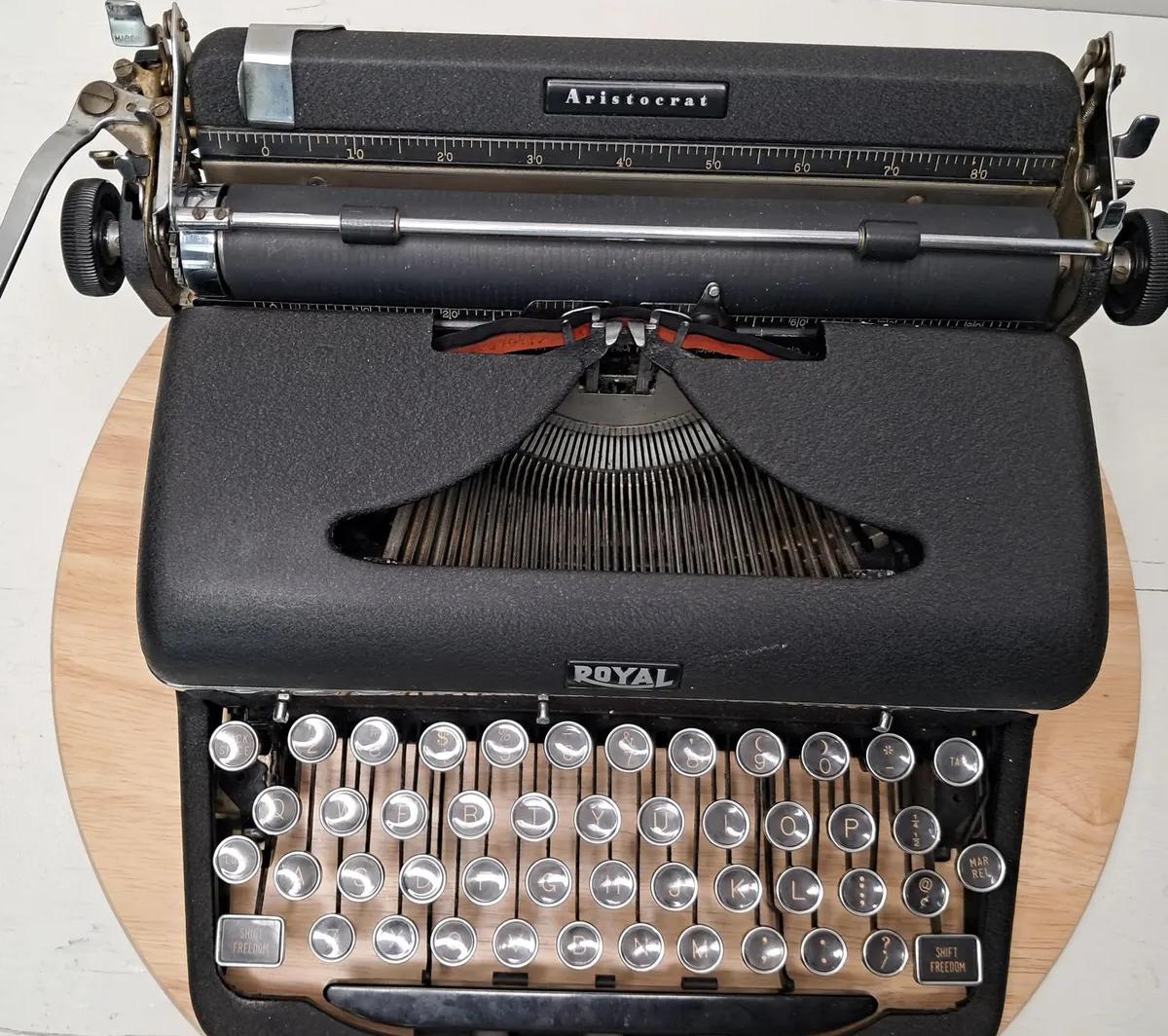 Royal Aristocrat pre-war deluxe portable
Royal's 1930s deluxe portable, the well-dressed older sibling to the Quiet De Luxe.
for looks
Royal Aristocrat pre-war deluxe portable
Royal's 1930s deluxe portable, the well-dressed older sibling to the Quiet De Luxe.
for looks
Desk anchor / office standard
13 machinesMachines that take to a desk and refuse to leave it. Office standards, frontstroke pioneers.
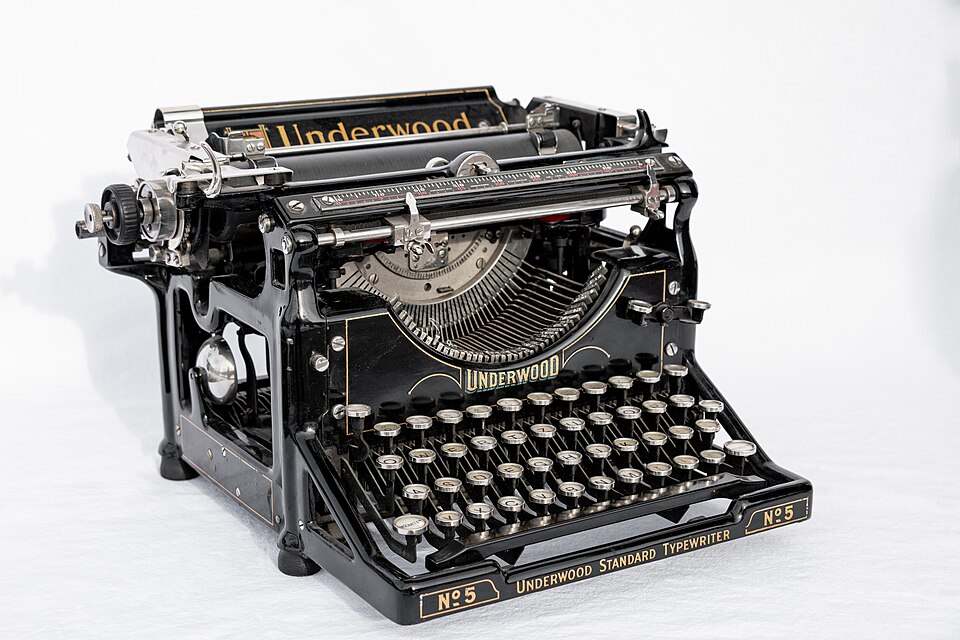 Underwood No. 5
The original frontstroke standard. The model that standardized modern typewriter design. Faulkner and Fitzgerald country.
for performance
Underwood No. 5
The original frontstroke standard. The model that standardized modern typewriter design. Faulkner and Fitzgerald country.
for performance
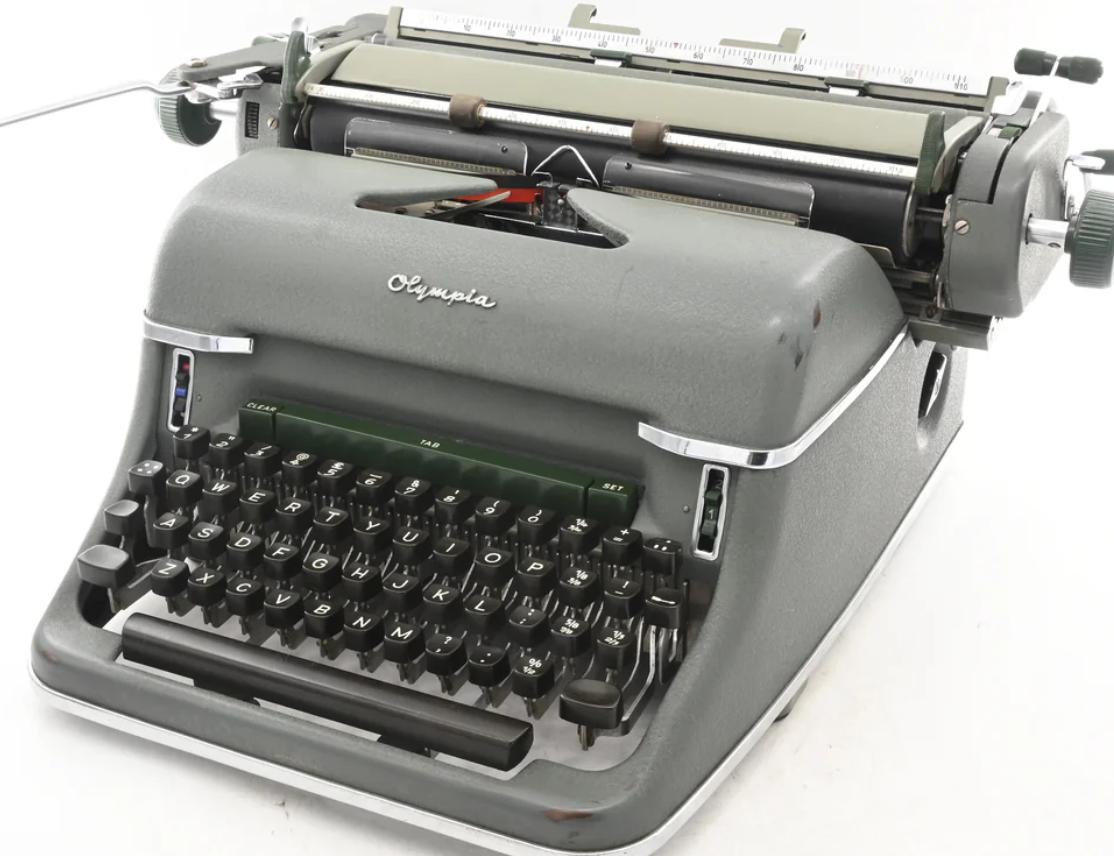 Olympia SG1 / SG3
German office tank built to outlast you. Will outwrite anything.
for long sessions
Olympia SG1 / SG3
German office tank built to outlast you. Will outwrite anything.
for long sessions
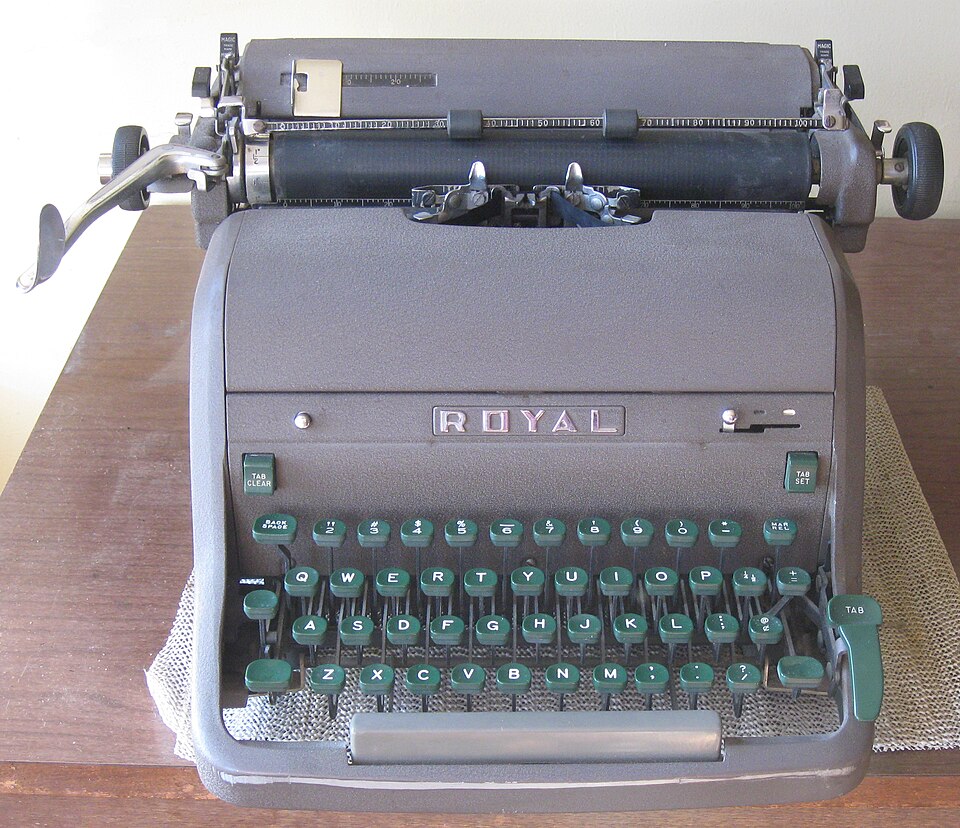 Royal HH
American postwar office, the tank that types. Firm, decisive, substantial. Magic Margin descendant.
for long sessions
Royal HH
American postwar office, the tank that types. Firm, decisive, substantial. Magic Margin descendant.
for long sessions
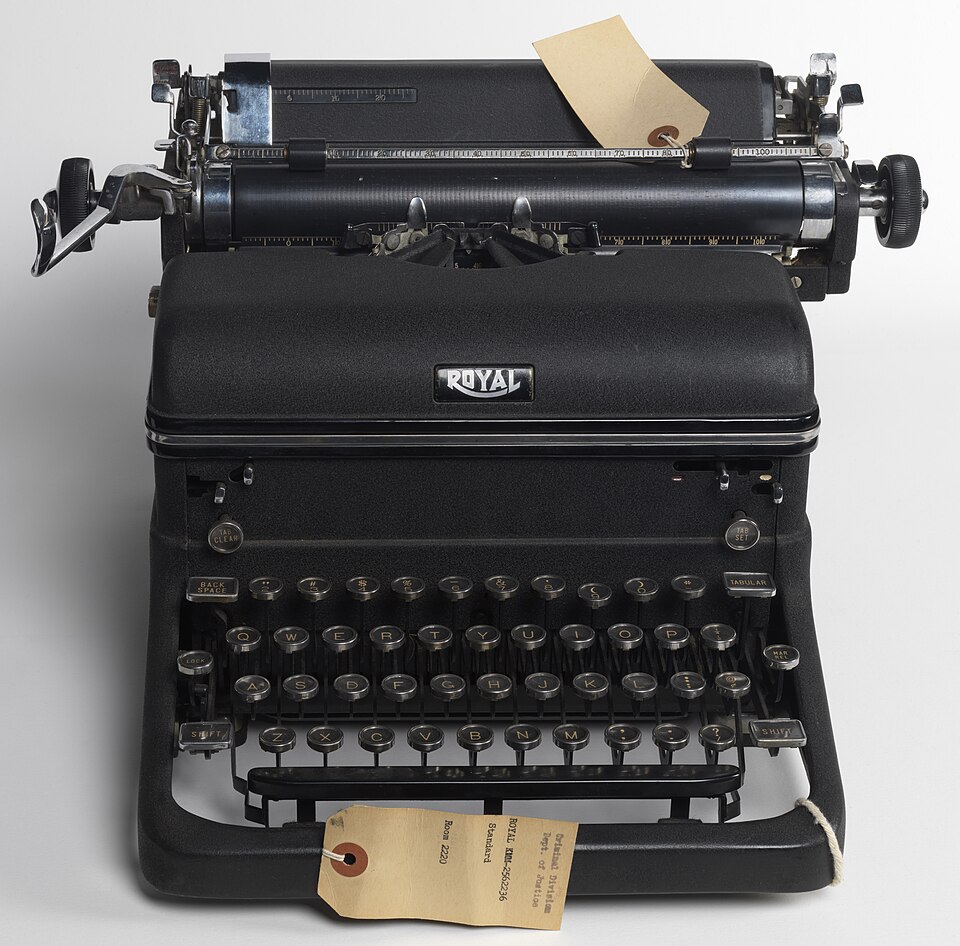 Royal KMM / KMG
American Magic Margin era. Prewar weight, full ringing clack. The newsroom soundtrack of the 1940s.
for performance
Royal KMM / KMG
American Magic Margin era. Prewar weight, full ringing clack. The newsroom soundtrack of the 1940s.
for performance
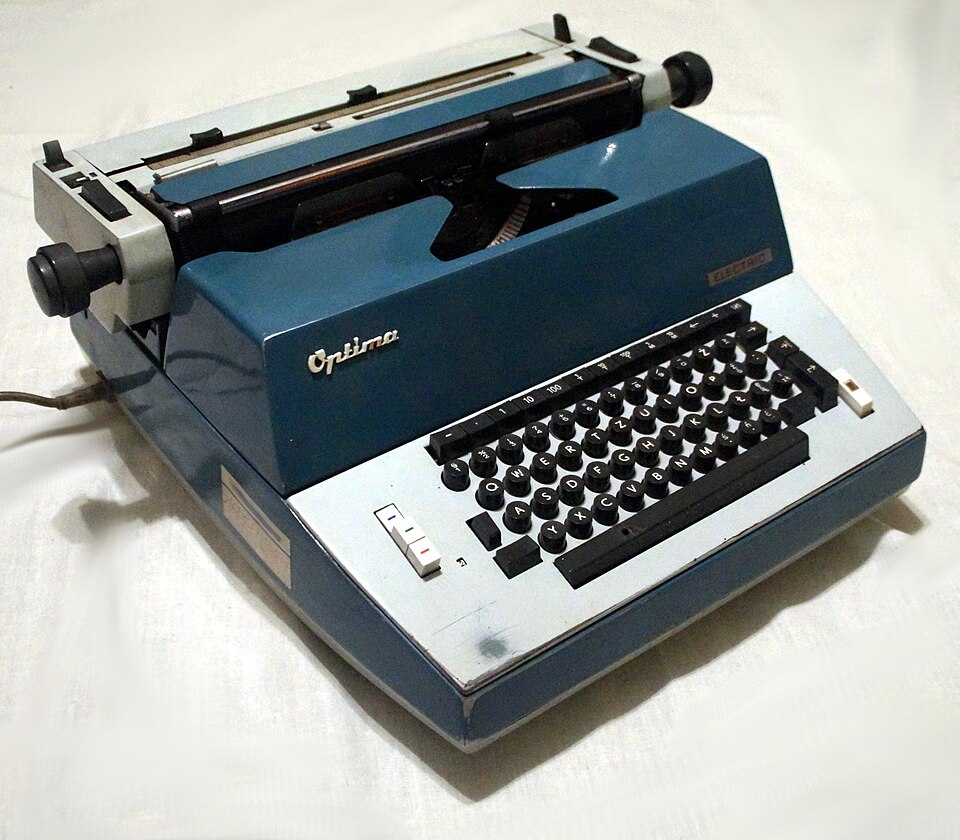 Optima (Elite, M10)
The workhorse from the other side of the wall. Olympia-derived mechanics, less collector cachet, often better value.
for long sessions
Royal 10 the glass-paneled standard
the office machine your grandfather typed his letters on
Olympia Model 8 the postwar German standard
the SG's quieter predecessor
Olivetti Lexikon 80 the Italian office showpiece
office work as beautiful object
Remington No. 12 the schoolhouse standard
the office standard
Optima (Elite, M10)
The workhorse from the other side of the wall. Olympia-derived mechanics, less collector cachet, often better value.
for long sessions
Royal 10 the glass-paneled standard
the office machine your grandfather typed his letters on
Olympia Model 8 the postwar German standard
the SG's quieter predecessor
Olivetti Lexikon 80 the Italian office showpiece
office work as beautiful object
Remington No. 12 the schoolhouse standard
the office standard
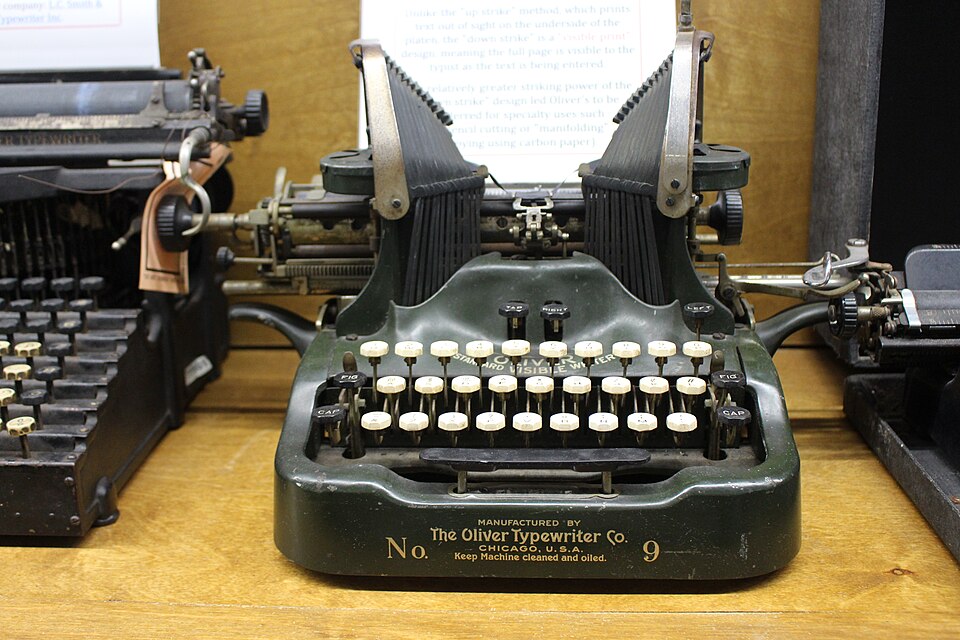 Oliver No. 9 the batwing
The green machine with the wings. A down-strike standard that was among the first to let you see what you were typing, and a collector's piece more than a daily writer.
for looks
Oliver No. 9 the batwing
The green machine with the wings. A down-strike standard that was among the first to let you see what you were typing, and a collector's piece more than a daily writer.
for looks
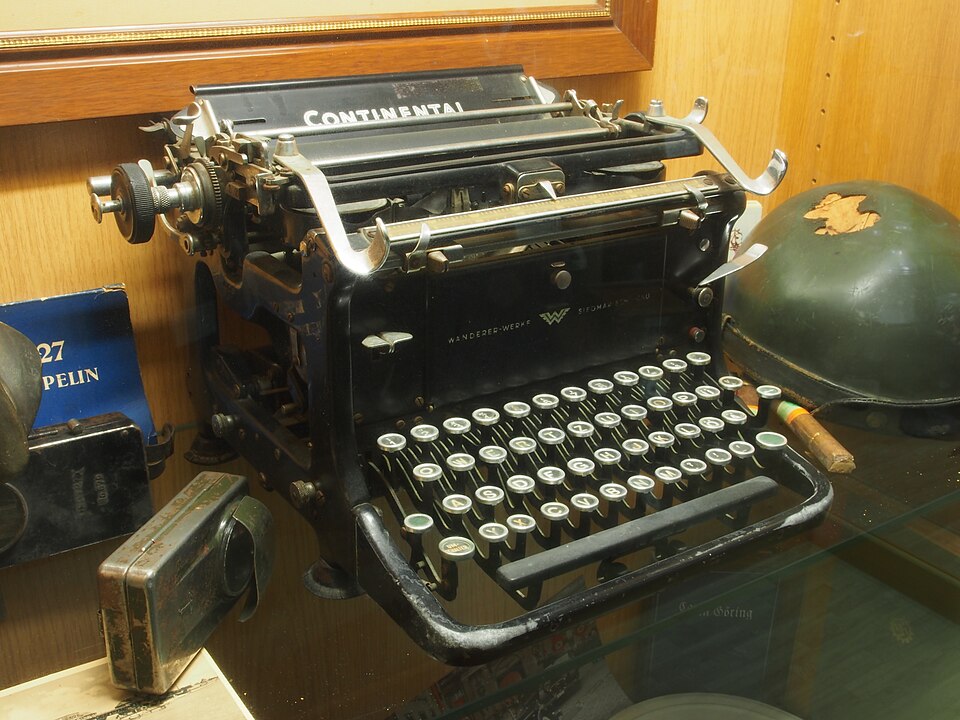 Continental the German standard
Chemnitz iron in black enamel and glass keys. A heavy, handsome German desk standard, with a leather-cased portable cousin collectors chase.
for looks
Continental the German standard
Chemnitz iron in black enamel and glass keys. A heavy, handsome German desk standard, with a leather-cased portable cousin collectors chase.
for looks
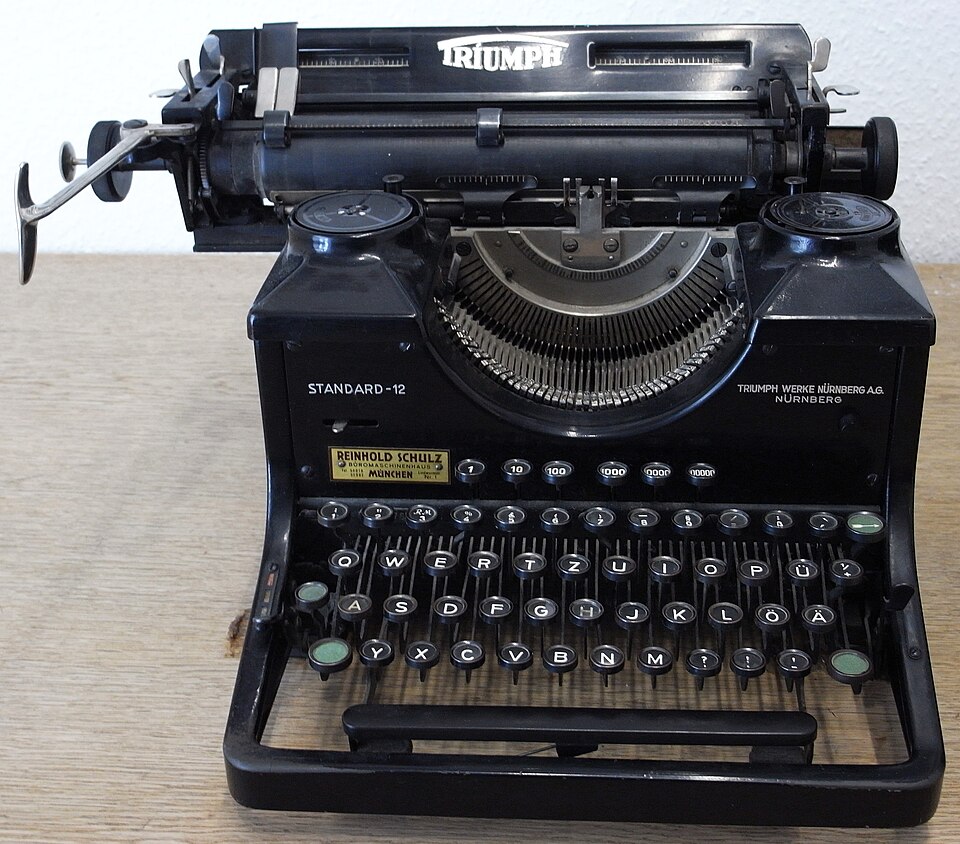 Triumph Standard 12 the Nuremberg standard
A 1930s German office standard from the firm whose founder also gave the world Triumph motorcycles, and that later built its name on the Norm and Perfekt portables.
for looks
Triumph Standard 12 the Nuremberg standard
A 1930s German office standard from the firm whose founder also gave the world Triumph motorcycles, and that later built its name on the Norm and Perfekt portables.
for looks
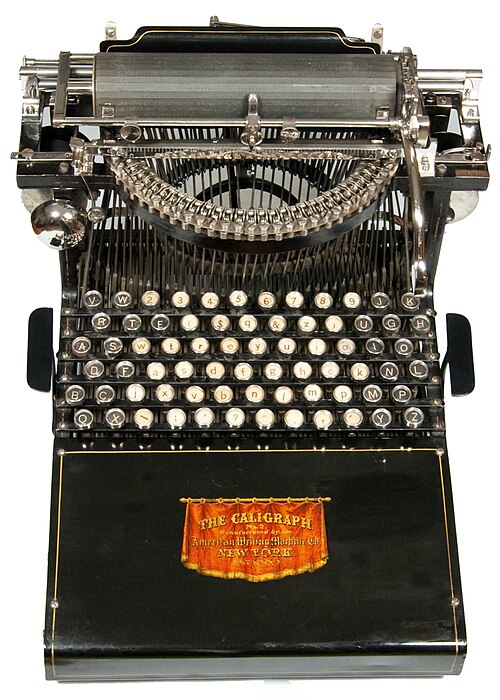 Caligraph No. 2 the double keyboard
No shift key at all: a separate key for every character, capital and lowercase, on a sprawling keyboard that competed head to head with Remington's shift for decades.
for looks
Caligraph No. 2 the double keyboard
No shift key at all: a separate key for every character, capital and lowercase, on a sprawling keyboard that competed head to head with Remington's shift for decades.
for looks
Pocketable / travel
14 machinesUltraportables and the lightest of the portables. The ones you can pack with a notebook and carry to the kitchen table, the cabin, the train.
Olivetti Lettera 32
McCarthy's machine. Light, quick, tight-wire fast. Italian compact icon. He typed five million words on one over fifty years.
for looks
Olivetti Lettera 22
Nizzoli's design icon. The IIT named it the best-designed product of the previous century in 1959. Compasso d'Oro winner. Sculpted lightness.
for looks
Hermes Baby / Rocket / Featherweight
Pocketable Swiss, the traveler's machine. Tilts its keyboard to shift — clever, characterful.
for travel
Adler / Triumph Tippa
German pocket workhorse. Slightly cramped for large hands but precise as a Swiss army knife.
for travel
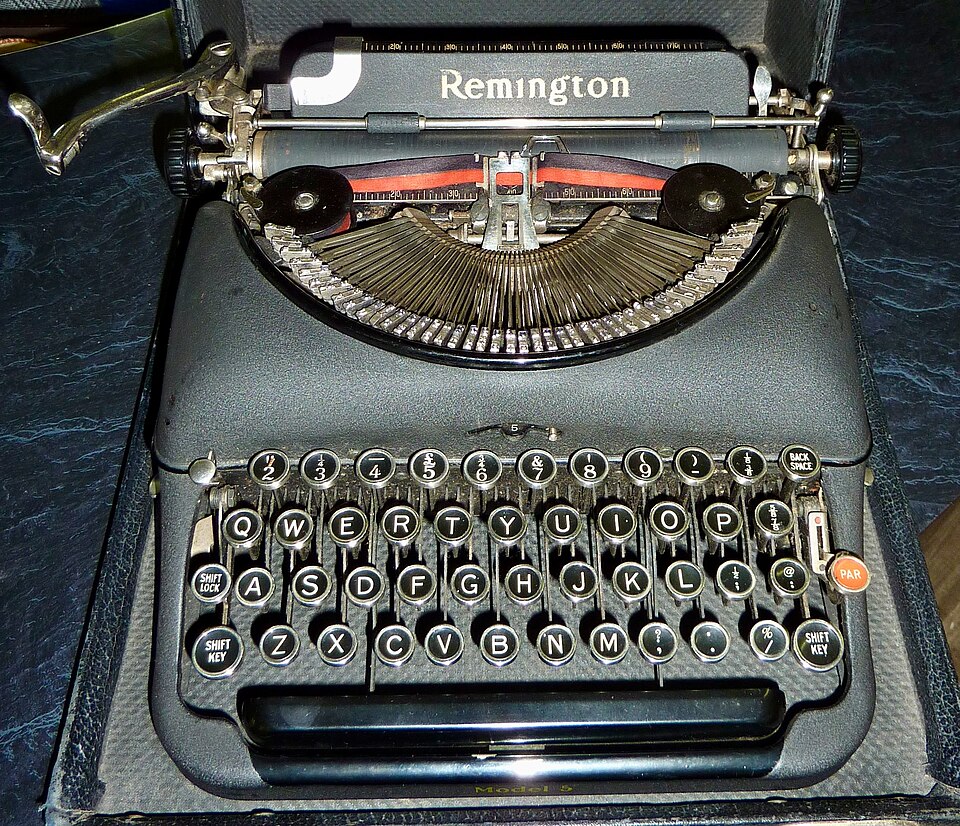 Remington Model 5 the 1937 Streamline
Remington's geared-striker classic. A leveraged, snappy stroke that runs smoother than a Smith-Corona, wrapped in the prettiest streamlining the company ever shipped.
for looks
Remington Model 5 the 1937 Streamline
Remington's geared-striker classic. A leveraged, snappy stroke that runs smoother than a Smith-Corona, wrapped in the prettiest streamlining the company ever shipped.
for looks
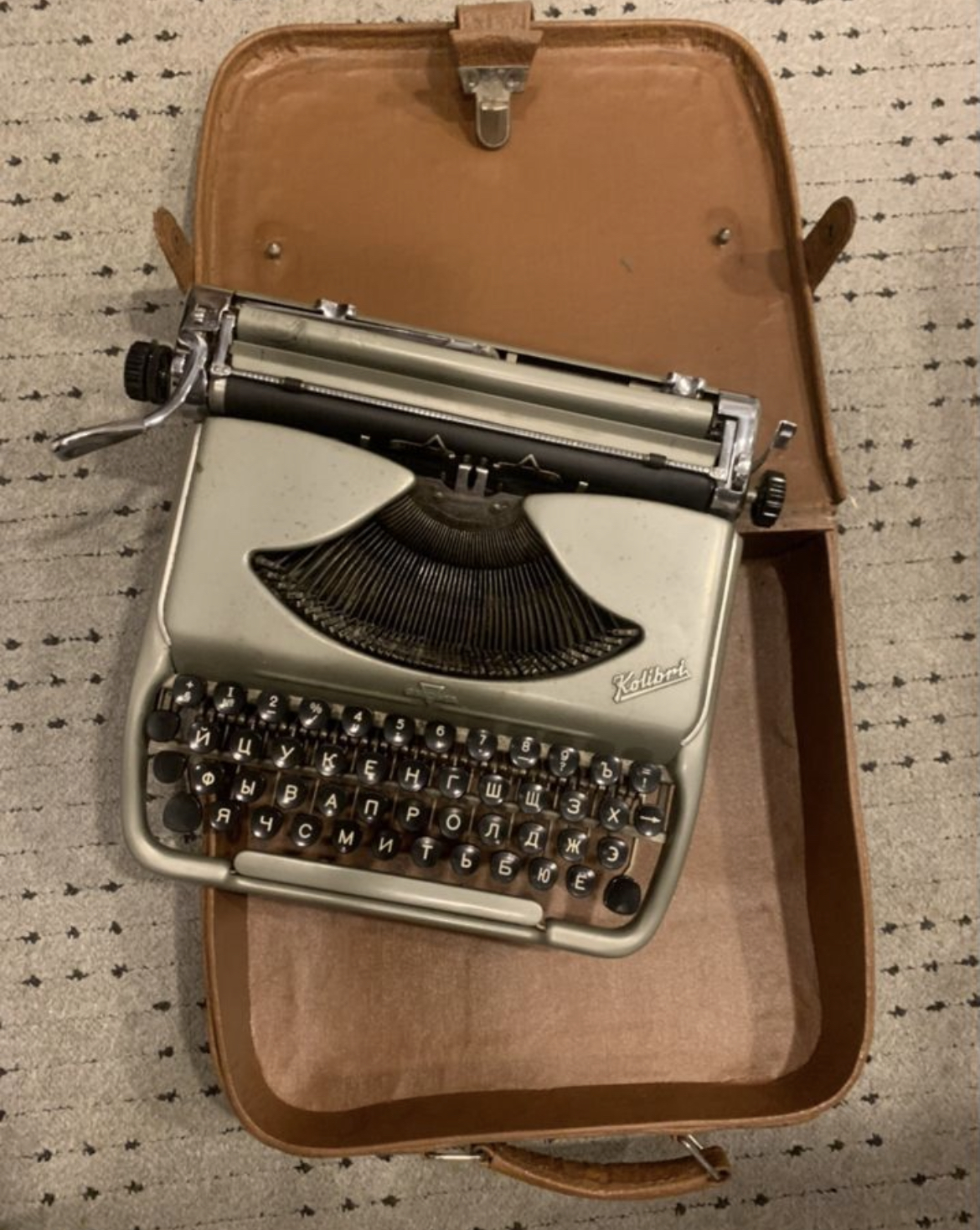 Groma Kolibri
Cult flat machine. Ultra-thin profile, shallow but precise.
for travel
Groma Kolibri
Cult flat machine. Ultra-thin profile, shallow but precise.
for travel
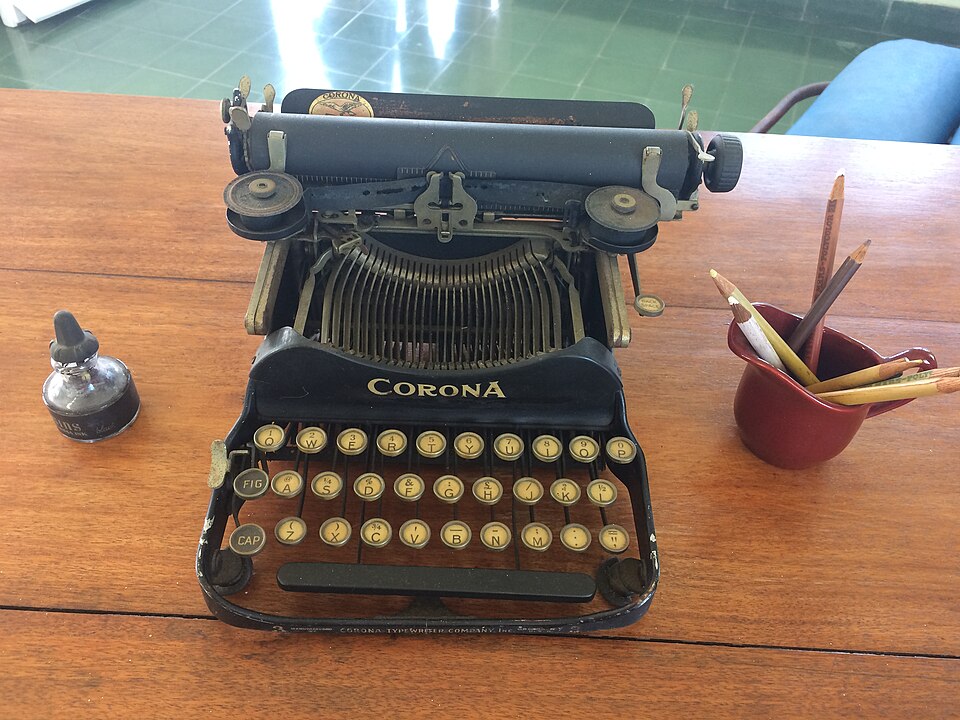 Corona No. 3 the folding portable
the journalist's pocket machine
Corona No. 3 the folding portable
the journalist's pocket machine
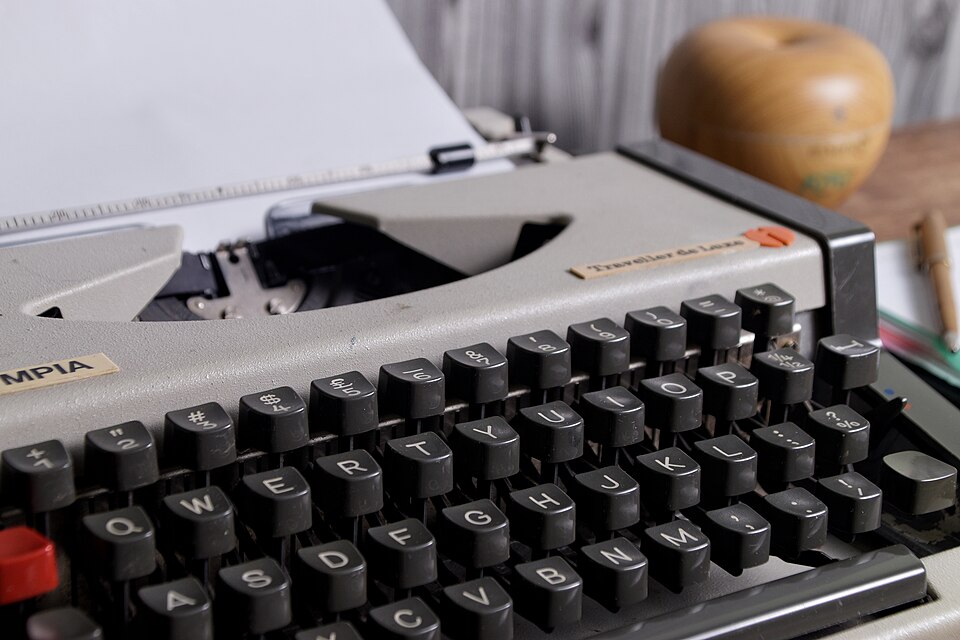 Olympia Traveller de Luxe the everyman ultraportable
the entry point
Olympia Traveller de Luxe the everyman ultraportable
the entry point
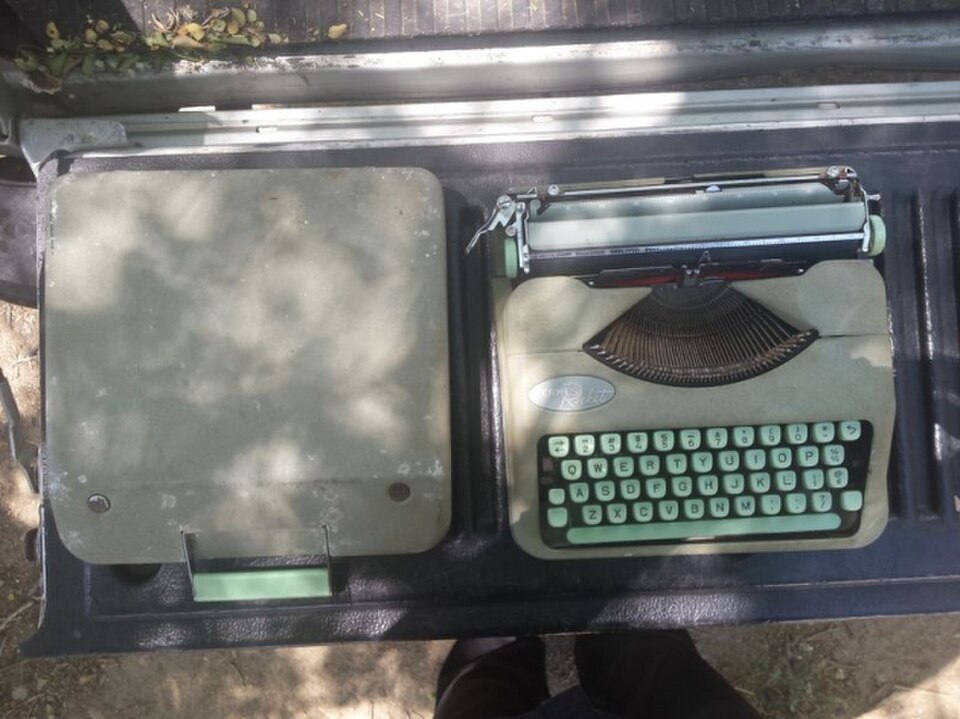 Hermes Rocket the U.S. Baby
the journalist's Hermes
Hermes Rocket the U.S. Baby
the journalist's Hermes
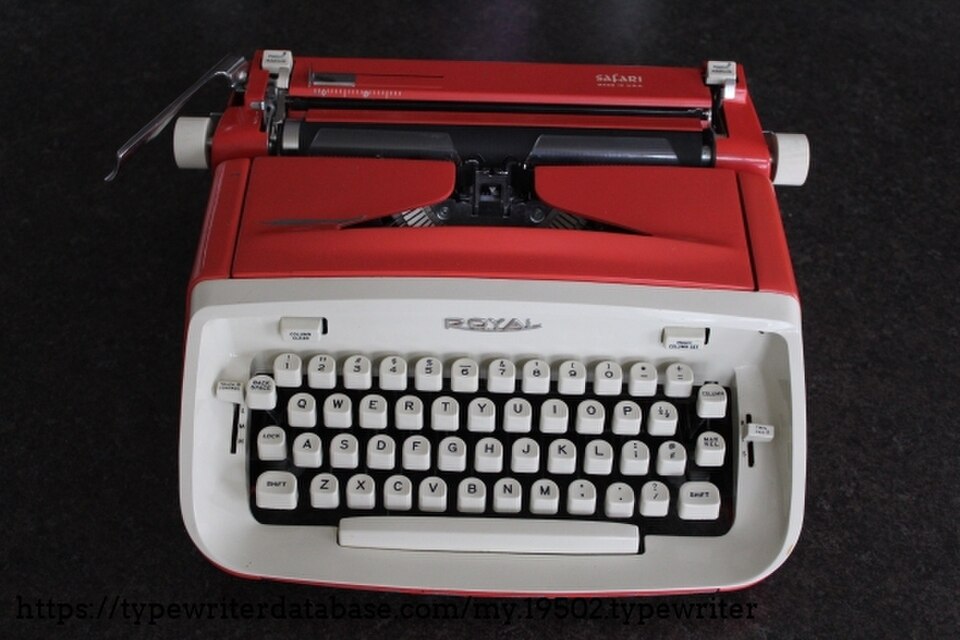 Royal Safari the candy-colored 60s portable
the typewriter as design object
Royal Safari the candy-colored 60s portable
the typewriter as design object
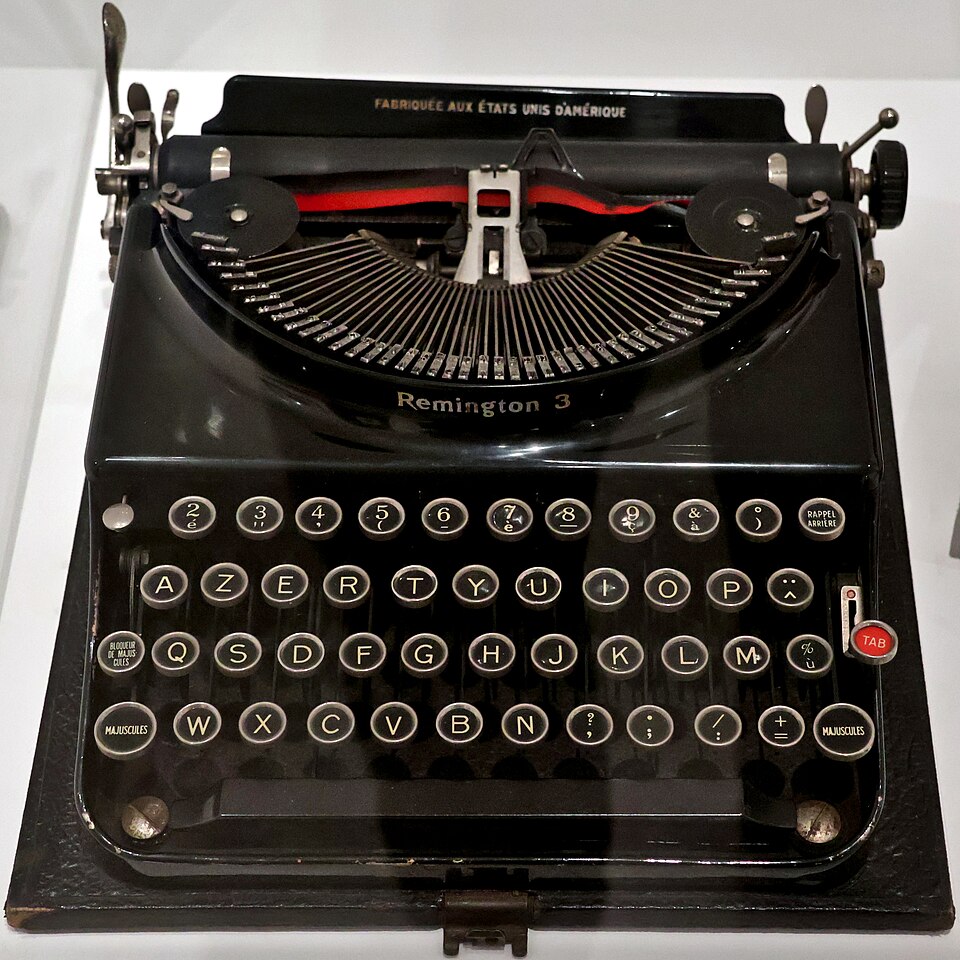 Remington 3 Portable the pre-war war correspondent's portable
the pre-war field machine
Remington 3 Portable the pre-war war correspondent's portable
the pre-war field machine
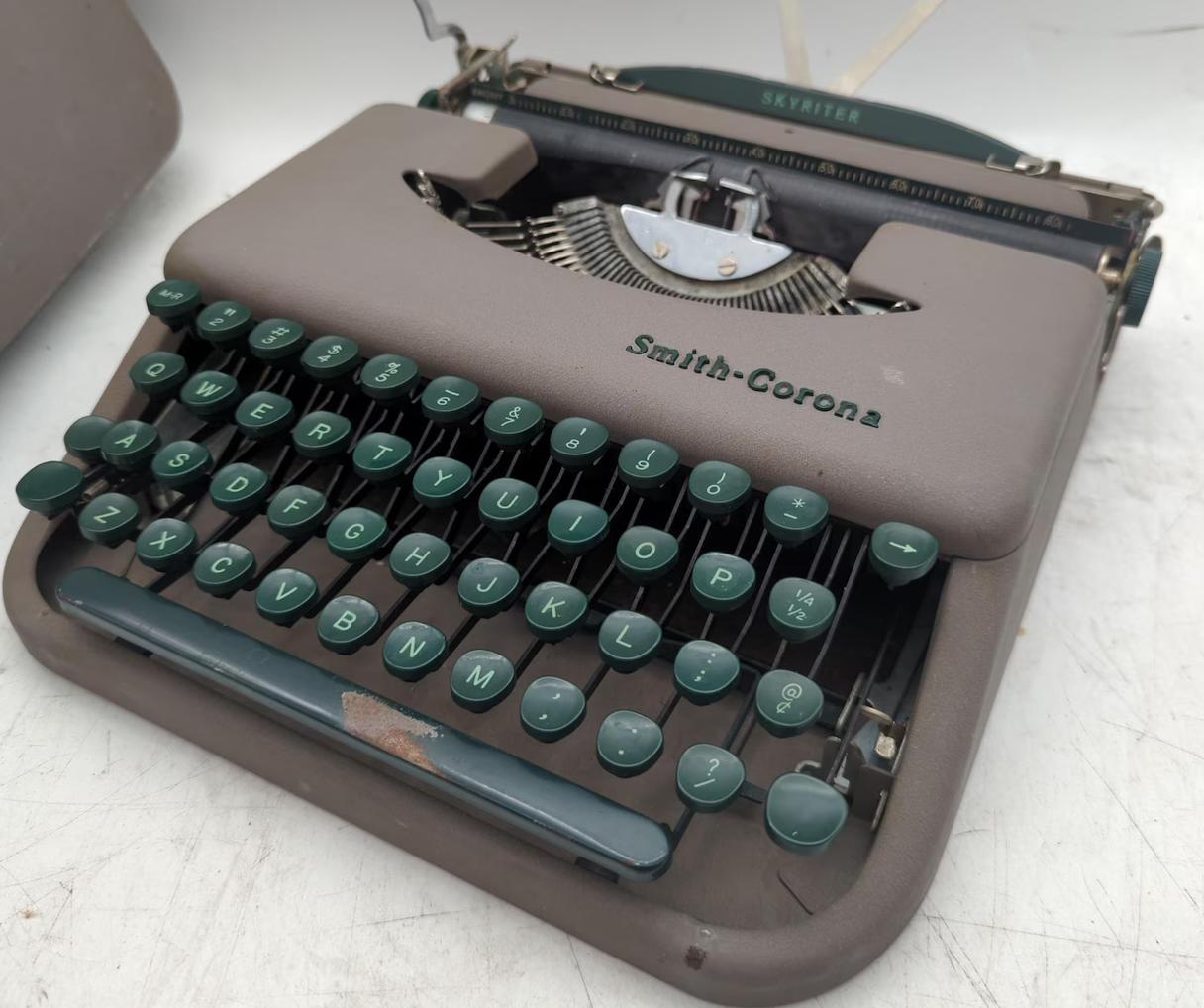 Smith-Corona Skyriter the carry-on
Smith-Corona's flat all-metal ultraportable, named for the age when you could slide your typewriter under an airplane seat.
for travel
Smith-Corona Skyriter the carry-on
Smith-Corona's flat all-metal ultraportable, named for the age when you could slide your typewriter under an airplane seat.
for travel
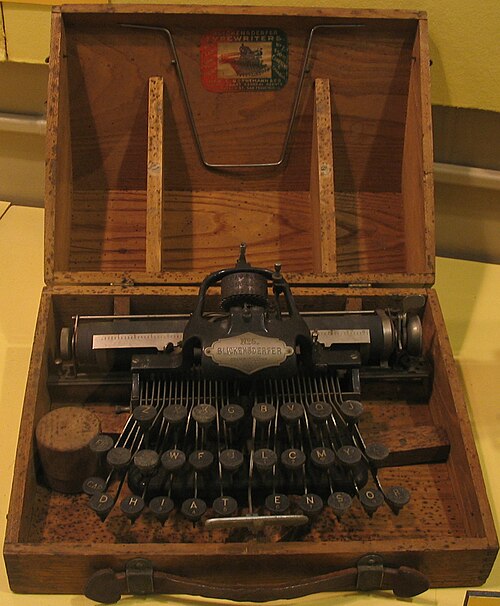 Blickensderfer No. 5 the typewheel
An 1890s portable that does away with typebars entirely: a single interchangeable type-wheel that turns and strikes, decades ahead of its time.
for looks
Blickensderfer No. 5 the typewheel
An 1890s portable that does away with typebars entirely: a single interchangeable type-wheel that turns and strikes, decades ahead of its time.
for looks
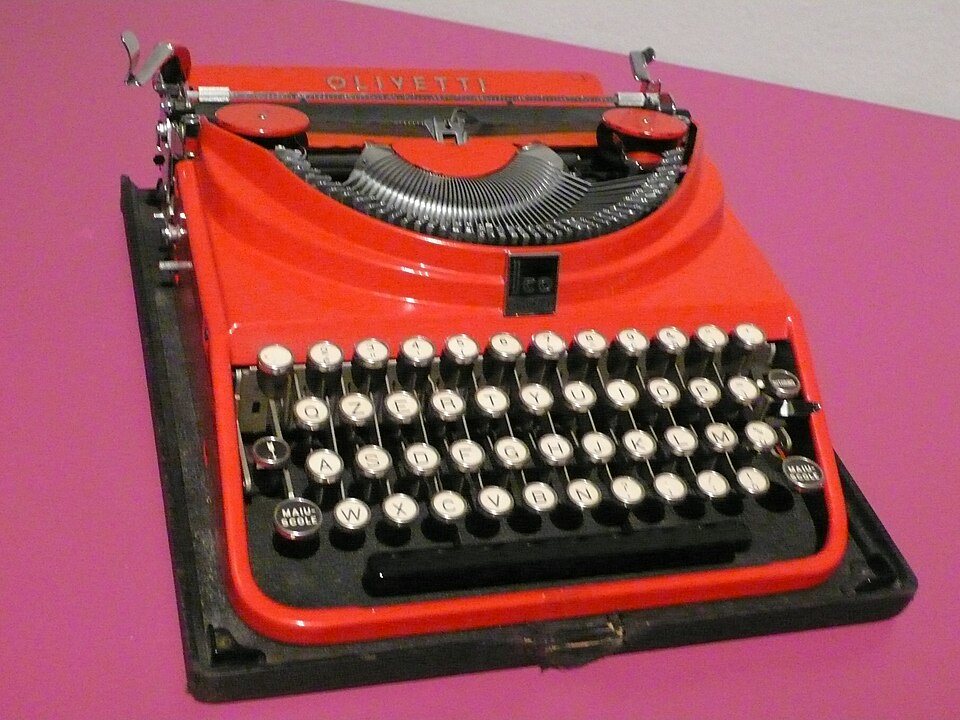 Olivetti MP1 (Ico) Olivetti's first portable
Olivetti's first portable, the art-deco machine that began the line the Lettera would later perfect; the ICO on its shield stands for the founder, Camillo Olivetti.
for looks
Olivetti MP1 (Ico) Olivetti's first portable
Olivetti's first portable, the art-deco machine that began the line the Lettera would later perfect; the ICO on its shield stands for the founder, Camillo Olivetti.
for looks
American interwar
22 machinesThe 1920s–40s American portable, when 'portable' still meant solid steel in a wood-and-leatherette case. The machines the modernists wrote on.
Remington Noiseless Portable the compact one
The stenographer's whisper. Mechanically singular — uses thrust action instead of impact, so it actually delivers a quieter sound.
for quiet writing
Remington Noiseless Model 7 big brother of the Noiseless Portable
The Noiseless Portable grown up: the same press-not-strike hush in a fuller body, with a paper table, a tabulator, and a speed mechanism that professionals and novelists leaned on for long quiet hours.
for quiet writing
Underwood No. 5
The original frontstroke standard. The model that standardized modern typewriter design. Faulkner and Fitzgerald country.
for performance
Royal KMM / KMG
American Magic Margin era. Prewar weight, full ringing clack. The newsroom soundtrack of the 1940s.
for performance
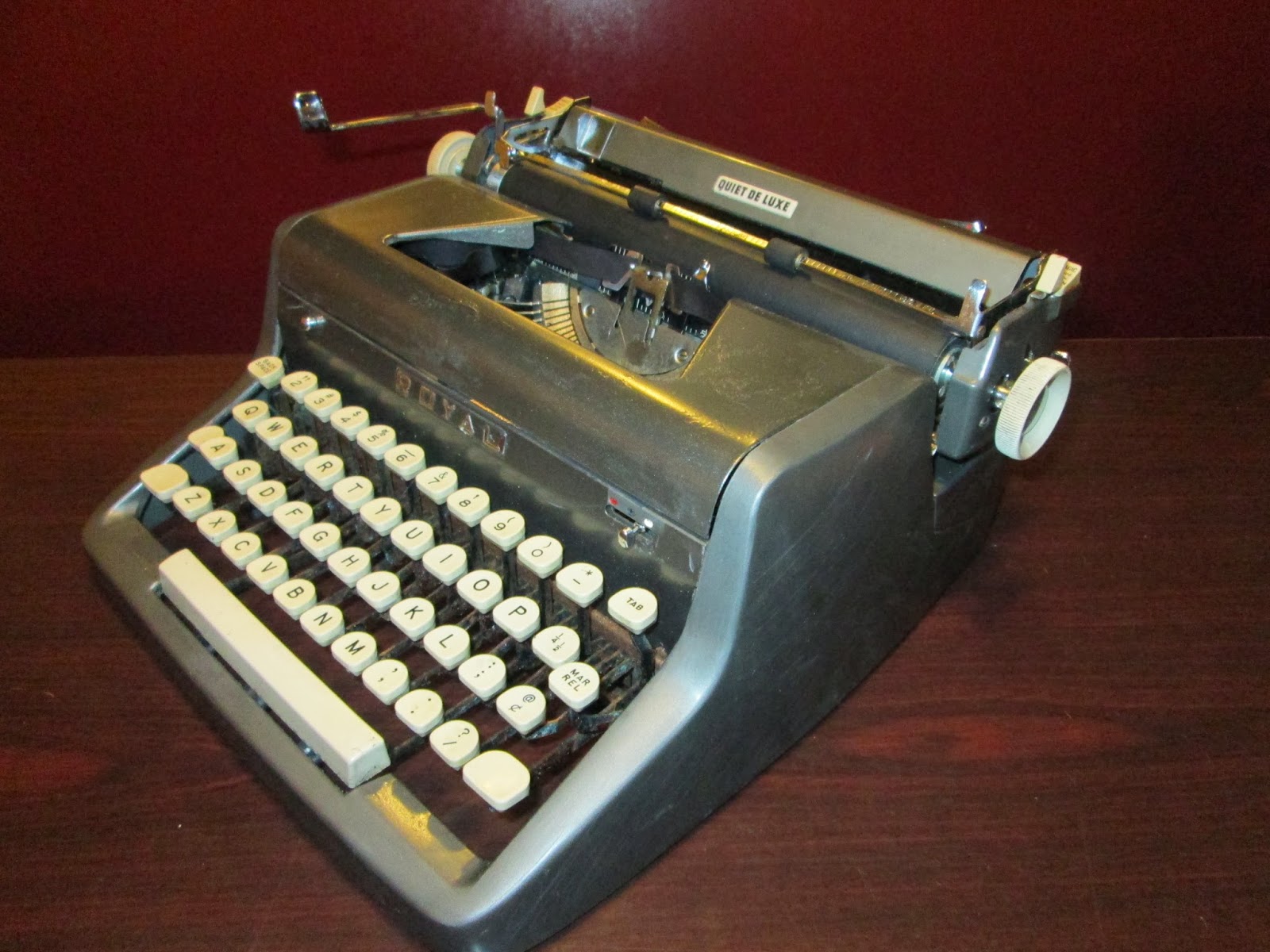 Royal Quiet De Luxe
Hemingway's machine. American interwar classic. Despite the name, not the quietest in the room.
for looks
Royal Quiet De Luxe
Hemingway's machine. American interwar classic. Despite the name, not the quietest in the room.
for looks
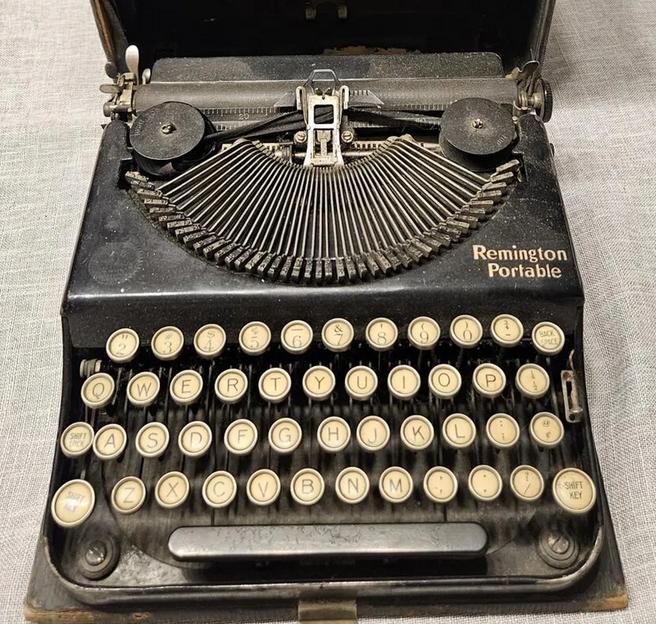 Remington Portable
1920s pioneer portable. Pop-up segment, four-row keyboard — the first truly portable typewriter for real writing.
for looks
Remington Model 5 the 1937 Streamline
Remington's geared-striker classic. A leveraged, snappy stroke that runs smoother than a Smith-Corona, wrapped in the prettiest streamlining the company ever shipped.
for looks
Hermes 2000 the pre-3000 flagship
the older, sharper sibling
Corona No. 3 the folding portable
the journalist's pocket machine
Royal 10 the glass-paneled standard
the office machine your grandfather typed his letters on
Remington Portable
1920s pioneer portable. Pop-up segment, four-row keyboard — the first truly portable typewriter for real writing.
for looks
Remington Model 5 the 1937 Streamline
Remington's geared-striker classic. A leveraged, snappy stroke that runs smoother than a Smith-Corona, wrapped in the prettiest streamlining the company ever shipped.
for looks
Hermes 2000 the pre-3000 flagship
the older, sharper sibling
Corona No. 3 the folding portable
the journalist's pocket machine
Royal 10 the glass-paneled standard
the office machine your grandfather typed his letters on
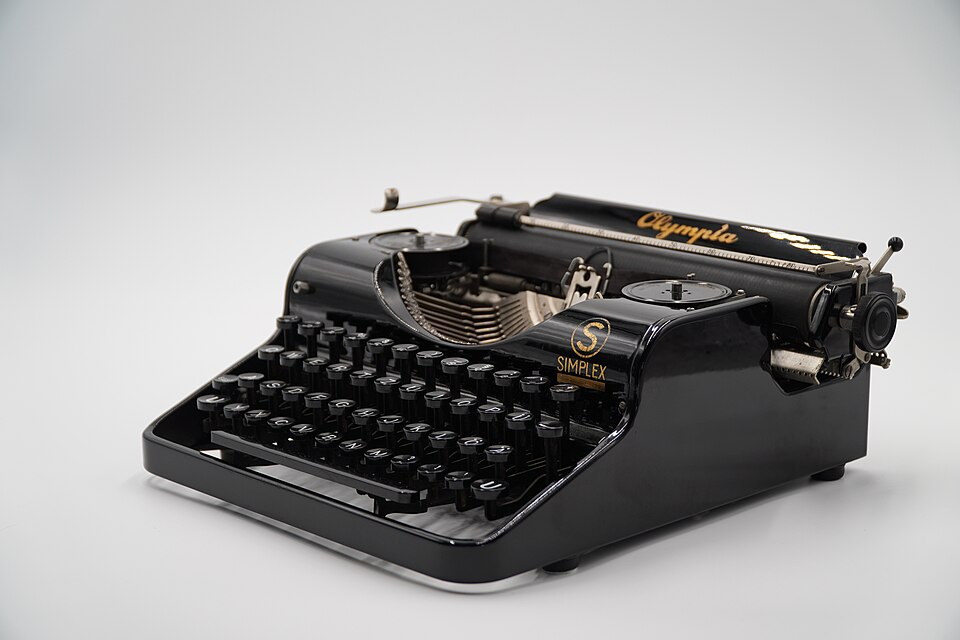 Olympia Simplex the pre-war Olympia portable
where Olympia started
Remington 3 Portable the pre-war war correspondent's portable
the pre-war field machine
Remington No. 12 the schoolhouse standard
the office standard
Imperial Good Companion the British one
Britain's long-running portable, named after a Priestley novel and once sold By Royal Appointment. Solid, snappy, and built to outlast its owner.
for long sessions
Royal Aristocrat pre-war deluxe portable
Royal's 1930s deluxe portable, the well-dressed older sibling to the Quiet De Luxe.
for looks
Oliver No. 9 the batwing
The green machine with the wings. A down-strike standard that was among the first to let you see what you were typing, and a collector's piece more than a daily writer.
for looks
Continental the German standard
Chemnitz iron in black enamel and glass keys. A heavy, handsome German desk standard, with a leather-cased portable cousin collectors chase.
for looks
Blickensderfer No. 5 the typewheel
An 1890s portable that does away with typebars entirely: a single interchangeable type-wheel that turns and strikes, decades ahead of its time.
for looks
Triumph Standard 12 the Nuremberg standard
A 1930s German office standard from the firm whose founder also gave the world Triumph motorcycles, and that later built its name on the Norm and Perfekt portables.
for looks
Hammond Multiplex the type-shuttle
No typebars and no shift in the usual sense: a swappable curved type-shuttle and a little hammer behind the paper, giving an unusually even impression and a font you could change at will.
for looks
Caligraph No. 2 the double keyboard
No shift key at all: a separate key for every character, capital and lowercase, on a sprawling keyboard that competed head to head with Remington's shift for decades.
for looks
Olivetti MP1 (Ico) Olivetti's first portable
Olivetti's first portable, the art-deco machine that began the line the Lettera would later perfect; the ICO on its shield stands for the founder, Camillo Olivetti.
for looks
Olympia Simplex the pre-war Olympia portable
where Olympia started
Remington 3 Portable the pre-war war correspondent's portable
the pre-war field machine
Remington No. 12 the schoolhouse standard
the office standard
Imperial Good Companion the British one
Britain's long-running portable, named after a Priestley novel and once sold By Royal Appointment. Solid, snappy, and built to outlast its owner.
for long sessions
Royal Aristocrat pre-war deluxe portable
Royal's 1930s deluxe portable, the well-dressed older sibling to the Quiet De Luxe.
for looks
Oliver No. 9 the batwing
The green machine with the wings. A down-strike standard that was among the first to let you see what you were typing, and a collector's piece more than a daily writer.
for looks
Continental the German standard
Chemnitz iron in black enamel and glass keys. A heavy, handsome German desk standard, with a leather-cased portable cousin collectors chase.
for looks
Blickensderfer No. 5 the typewheel
An 1890s portable that does away with typebars entirely: a single interchangeable type-wheel that turns and strikes, decades ahead of its time.
for looks
Triumph Standard 12 the Nuremberg standard
A 1930s German office standard from the firm whose founder also gave the world Triumph motorcycles, and that later built its name on the Norm and Perfekt portables.
for looks
Hammond Multiplex the type-shuttle
No typebars and no shift in the usual sense: a swappable curved type-shuttle and a little hammer behind the paper, giving an unusually even impression and a font you could change at will.
for looks
Caligraph No. 2 the double keyboard
No shift key at all: a separate key for every character, capital and lowercase, on a sprawling keyboard that competed head to head with Remington's shift for decades.
for looks
Olivetti MP1 (Ico) Olivetti's first portable
Olivetti's first portable, the art-deco machine that began the line the Lettera would later perfect; the ICO on its shield stands for the founder, Camillo Olivetti.
for looks
American mid-century
12 machinesThe Silent family and its siblings — the postwar American portable hitting its stride. Working writers' machines in painted steel and increasing amounts of plastic.
Smith-Corona Silent-Super
The Smith-Corona peak. Smooth, well-damped, refined — the American answer to the Hermes question.
for long sessions
Smith-Corona Silent
American mid-century reliable. The portable that the Silent-Super refined.
for a first machine
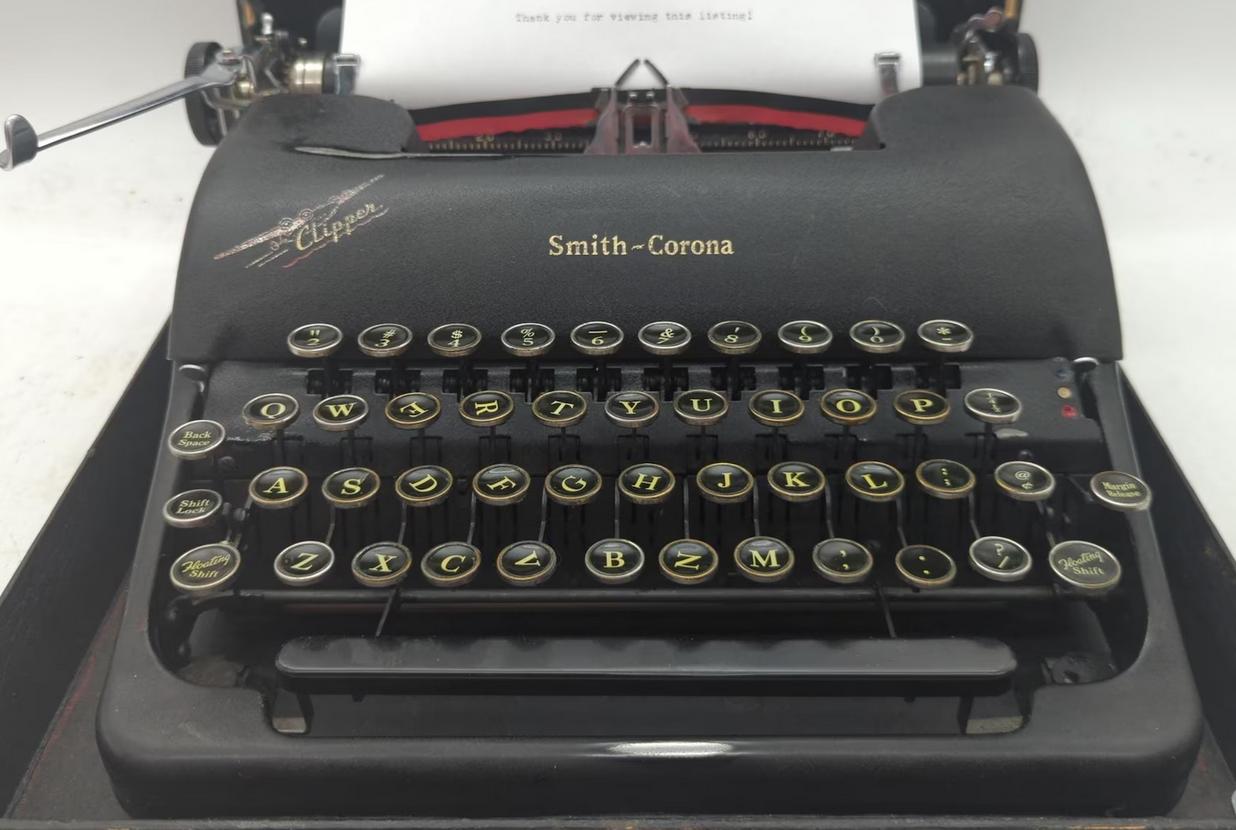 Smith-Corona Sterling / Clipper
Silent's working siblings. Same core, slightly different feature sets and finishes.
for a first machine
Smith-Corona Sterling / Clipper
Silent's working siblings. Same core, slightly different feature sets and finishes.
for a first machine
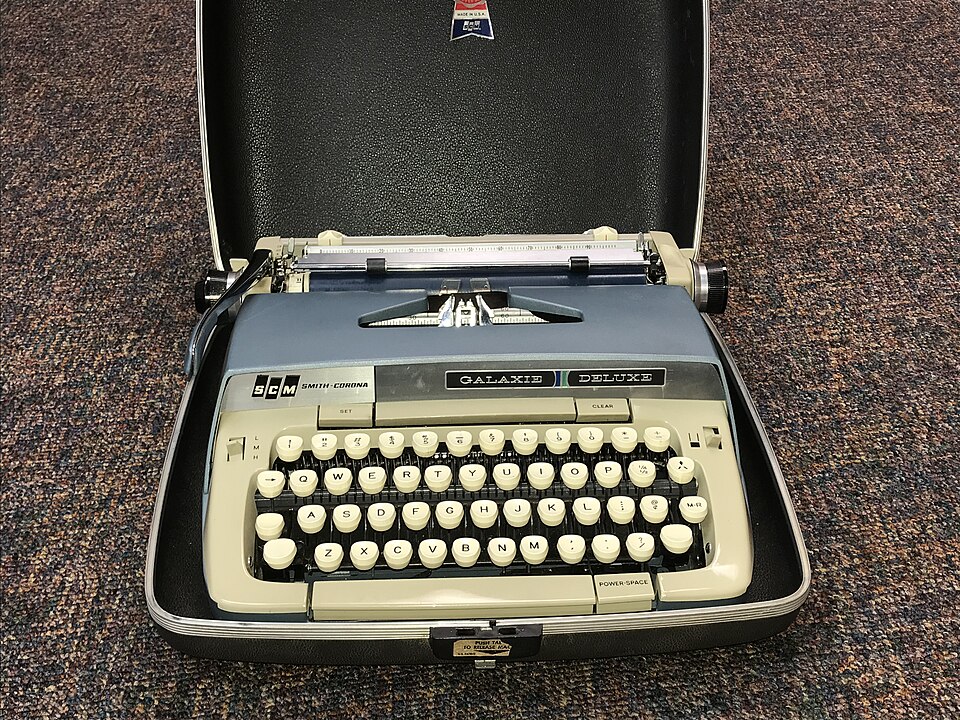 Smith-Corona Galaxie / Galaxie Deluxe
The 60s American workhorse. Lighter, more plastic, less prestige — but a good first machine and frequently undervalued.
for a first machine
Remington Quiet-Riter
Postwar American quiet portable. Less mechanically remarkable than the prewar Noiseless, more refined as a daily-driver.
for quiet writing
Smith-Corona Galaxie / Galaxie Deluxe
The 60s American workhorse. Lighter, more plastic, less prestige — but a good first machine and frequently undervalued.
for a first machine
Remington Quiet-Riter
Postwar American quiet portable. Less mechanically remarkable than the prewar Noiseless, more refined as a daily-driver.
for quiet writing
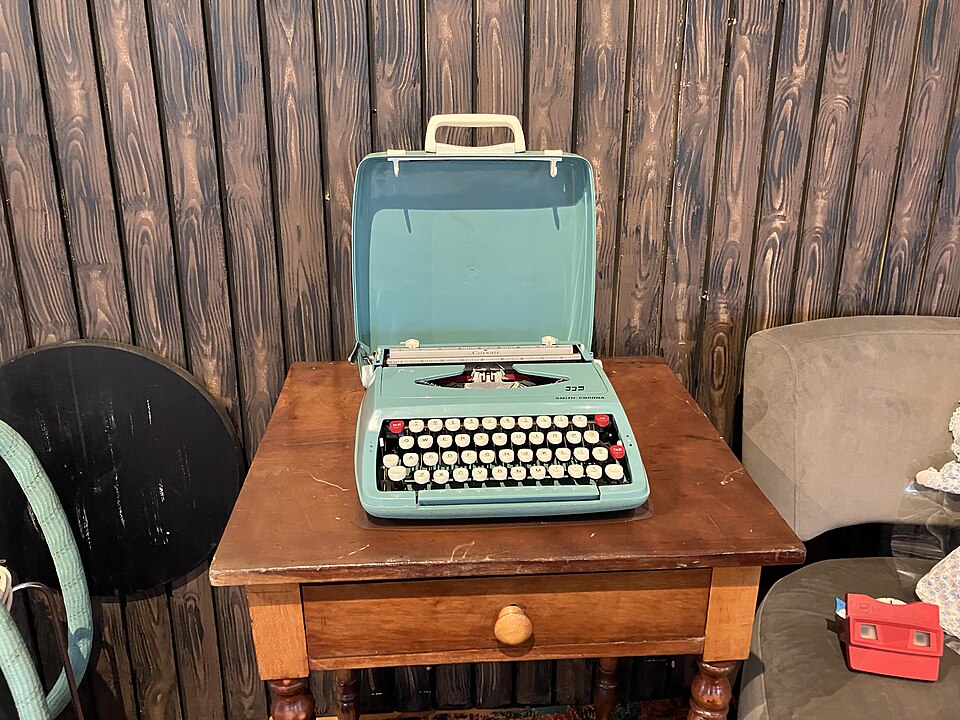 Smith-Corona Corsair the sturdy 1960s portable
the dependable middle child
Smith-Corona Corsair the sturdy 1960s portable
the dependable middle child
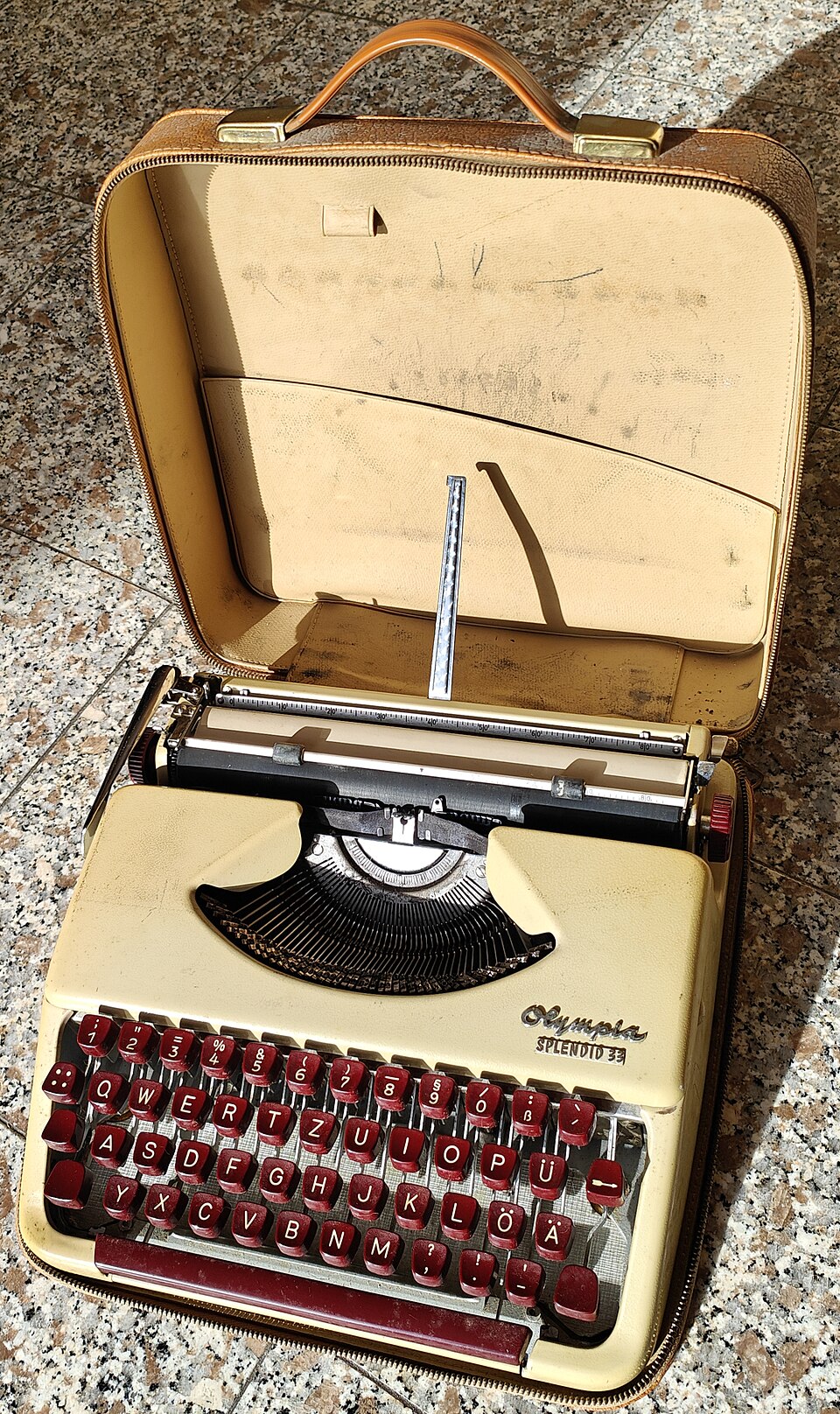 Olympia Splendid 33/66 the SM's budget sibling
the cheaper Olympia that types like the expensive one
Olympia Splendid 33/66 the SM's budget sibling
the cheaper Olympia that types like the expensive one
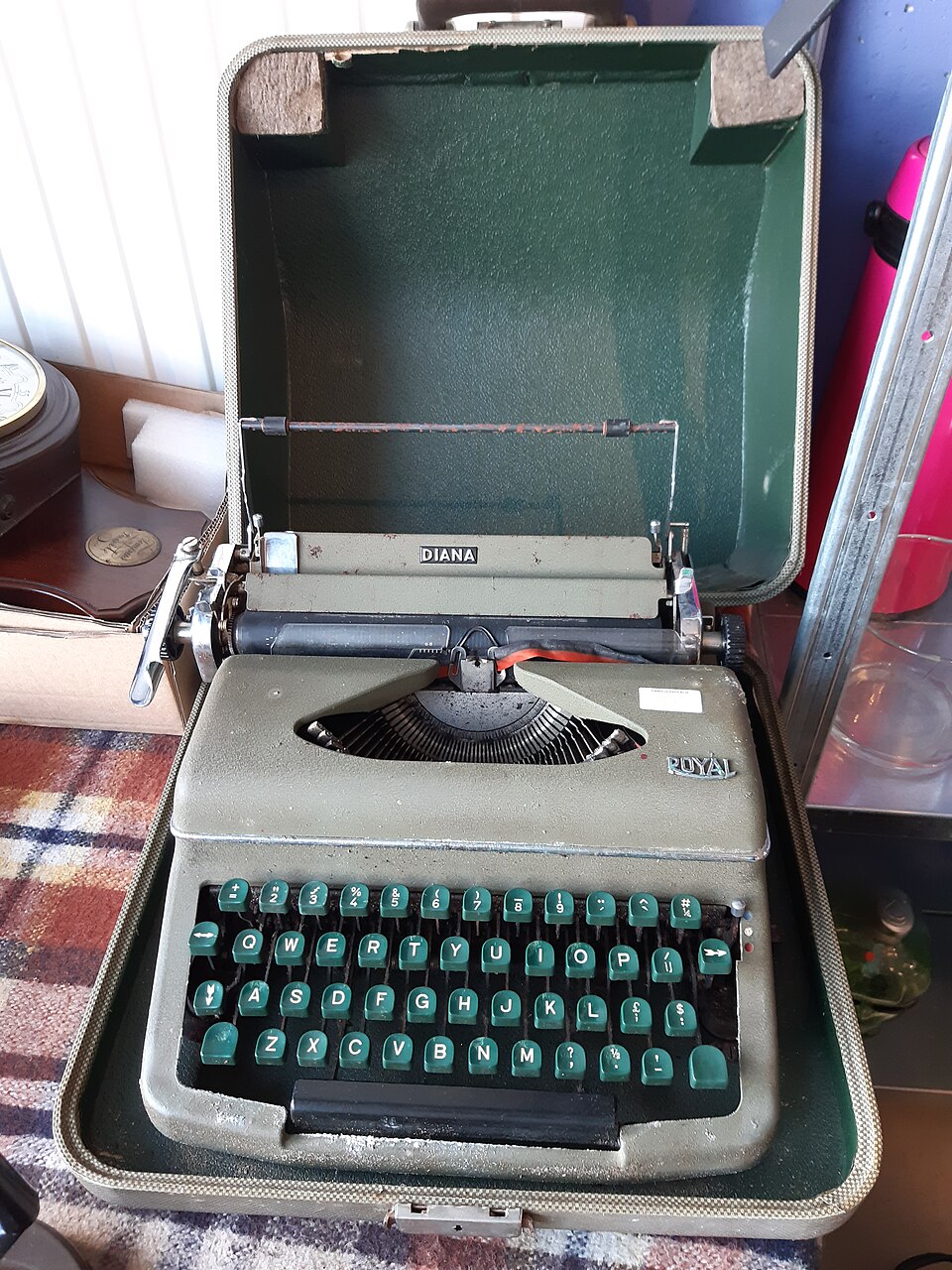 Royal Diana the trans-Atlantic Royal
Royal in a German accent
Royal Futura 600
what the QDL grew up into
for long sessions
Facit TP1 the Swedish prince
Swedish steel and a designer's restraint. Understated, light to the hand, and built to office standards in a portable shell.
for long sessions
Torpedo 18
The German portable people compare to the Olympia SM3, with a basket shift instead of a moving carriage.
for long sessions
Smith-Corona Skyriter the carry-on
Smith-Corona's flat all-metal ultraportable, named for the age when you could slide your typewriter under an airplane seat.
for travel
Royal Diana the trans-Atlantic Royal
Royal in a German accent
Royal Futura 600
what the QDL grew up into
for long sessions
Facit TP1 the Swedish prince
Swedish steel and a designer's restraint. Understated, light to the hand, and built to office standards in a portable shell.
for long sessions
Torpedo 18
The German portable people compare to the Olympia SM3, with a basket shift instead of a moving carriage.
for long sessions
Smith-Corona Skyriter the carry-on
Smith-Corona's flat all-metal ultraportable, named for the age when you could slide your typewriter under an airplane seat.
for travel
Italian sculptural
8 machinesWhen industrial design and writing-machine engineering shook hands. Olivetti hired Nizzoli, then Sottsass, and turned the typewriter into a piece of mid-century fashion you happened to be able to write on.
Olivetti Lettera 32
McCarthy's machine. Light, quick, tight-wire fast. Italian compact icon. He typed five million words on one over fifty years.
for looks
Olivetti Lettera 22
Nizzoli's design icon. The IIT named it the best-designed product of the previous century in 1959. Compasso d'Oro winner. Sculpted lightness.
for looks
Olivetti Studio 44
Italian semi-standard. Sometimes called the best Olivetti for writers — more substance than the Letteras, more springy than a standard.
for long sessions
Olivetti Valentine
Ettore Sottsass's red object. Lettera 32 internals dressed in glossy plastic.
for looks
Olivetti Lexikon 80 the Italian office showpiece
office work as beautiful object
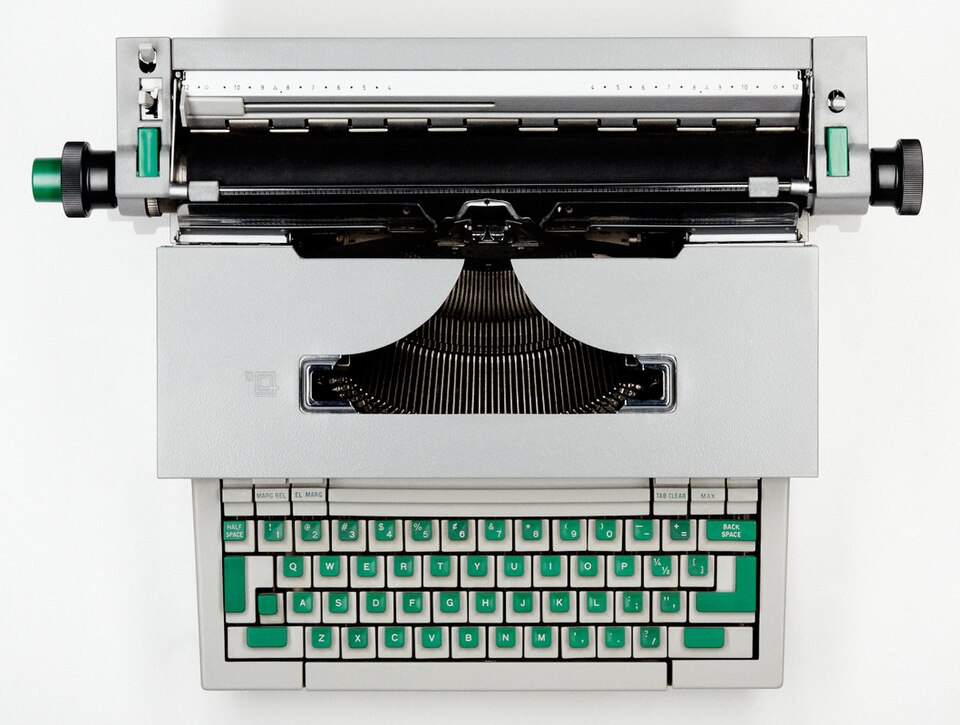 Olivetti Praxis 48 Sottsass's electric
the design-museum portable
Olivetti Studio 46
The bigger, plainer Olivetti, a semi-standard portable for people who write a lot.
for long sessions
Olivetti MP1 (Ico) Olivetti's first portable
Olivetti's first portable, the art-deco machine that began the line the Lettera would later perfect; the ICO on its shield stands for the founder, Camillo Olivetti.
for looks
Olivetti Praxis 48 Sottsass's electric
the design-museum portable
Olivetti Studio 46
The bigger, plainer Olivetti, a semi-standard portable for people who write a lot.
for long sessions
Olivetti MP1 (Ico) Olivetti's first portable
Olivetti's first portable, the art-deco machine that began the line the Lettera would later perfect; the ICO on its shield stands for the founder, Camillo Olivetti.
for looks
Swiss precision
9 machinesPaillard's machines. Watchmaker discipline applied to writing tools. Quiet, smooth, expensive.
Hermes 3000 1st gen, "curvy"
Swiss whisper, the writer's quiet companion. Plath's Bell Jar, Kerouac's Vanity of Duluoz, McMurtry's everything.
for quiet writing
Hermes 3000 2nd gen, "boxy"
The squared metal 3000. Same mechanism inside a flatter shell.
for quiet writing
Hermes 3000 3rd gen, "squared"
The last 3000. Plastic shell, still the Hermes mechanism, and usually the cheapest way into the family.
for quiet writing
Hermes Baby / Rocket / Featherweight
Pocketable Swiss, the traveler's machine. Tilts its keyboard to shift — clever, characterful.
for travel
Hermes Ambassador the heaviest portable, the lightest standard
the bank vault that types
Hermes 2000 the pre-3000 flagship
the older, sharper sibling
Hermes Rocket the U.S. Baby
the journalist's Hermes
Hermes Media the mid-size Swiss between Baby and 3000
the one that gets overlooked
Hermes 9 the office Hermes
the Ambassador's sister
East of the wall
4 machinesEast German engineering — Erika, Optima, Groma. Less English-language key layouts, but often Olympia-quality at a fraction of the asking price.
Groma Kolibri
Cult flat machine. Ultra-thin profile, shallow but precise.
for travel
Erika (5, 10, Model 100)
East German quality.
for long sessions
Optima (Elite, M10)
The workhorse from the other side of the wall. Olympia-derived mechanics, less collector cachet, often better value.
for long sessions
Consul the Czech sleeper
Made by a Czech arms factory, exported under a dozen names, and quietly better built than its price ever suggested.
for long sessions
Late-era surprises
5 machinesJapanese-made portables from the 1960s onward, often dismissed by collectors as plastic also-rans. A few are genuinely excellent. Most are honest, agreeable, and cheap.
Hermes 3000 3rd gen, "squared"
The last 3000. Plastic shell, still the Hermes mechanism, and usually the cheapest way into the family.
for quiet writing
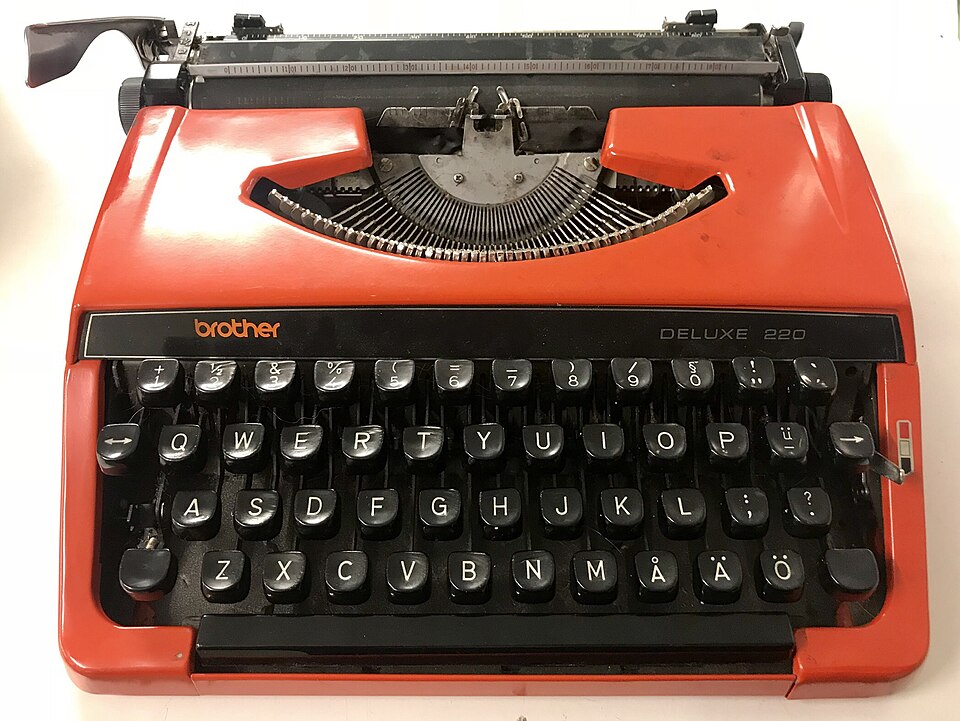 Brother JP-1 / JP-7 / Deluxe
Underrated late-era Japanese. Often light, occasionally plasticky, sometimes surprisingly good.
for a first machine
Olympia Traveller de Luxe the everyman ultraportable
the entry point
Royal Safari the candy-colored 60s portable
the typewriter as design object
Brother JP-1 / JP-7 / Deluxe
Underrated late-era Japanese. Often light, occasionally plasticky, sometimes surprisingly good.
for a first machine
Olympia Traveller de Luxe the everyman ultraportable
the entry point
Royal Safari the candy-colored 60s portable
the typewriter as design object
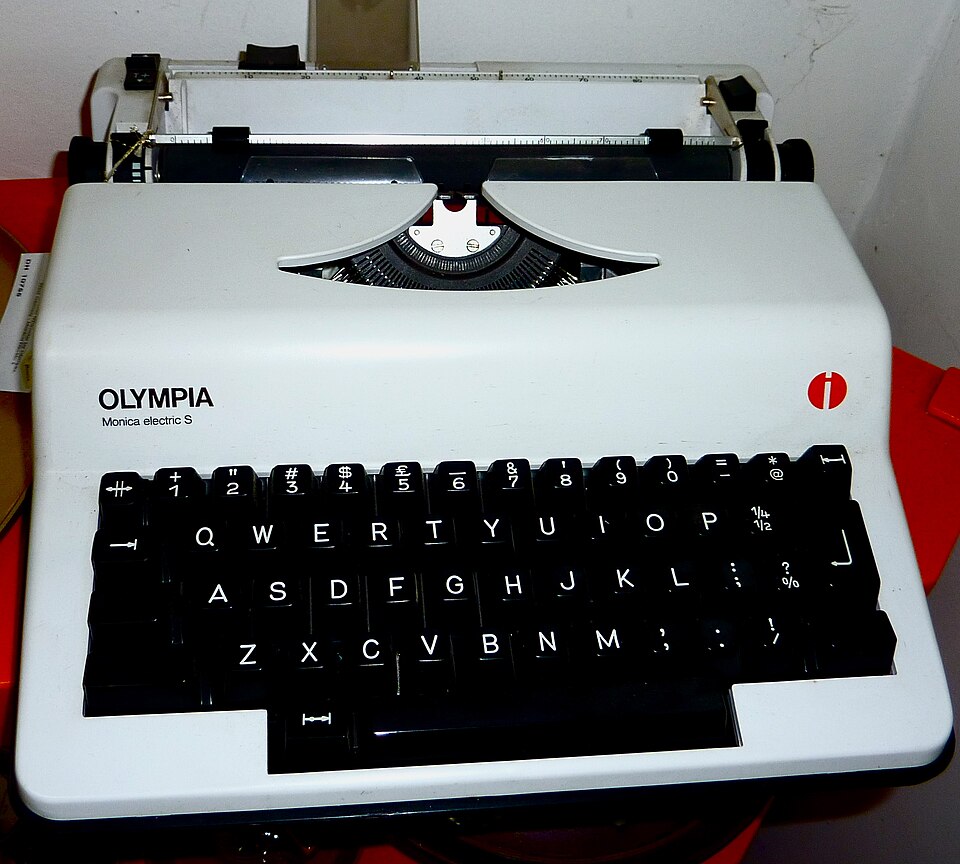 Olympia Monica Electric S the German electric portable
Olympia plugged in
Olympia Monica Electric S the German electric portable
Olympia plugged in
Electric
3 machinesA different beast entirely. The golf-ball-element electrics gave you keyboard-like speed with mechanical print, and one of them sits at the root of the word-processing tree.
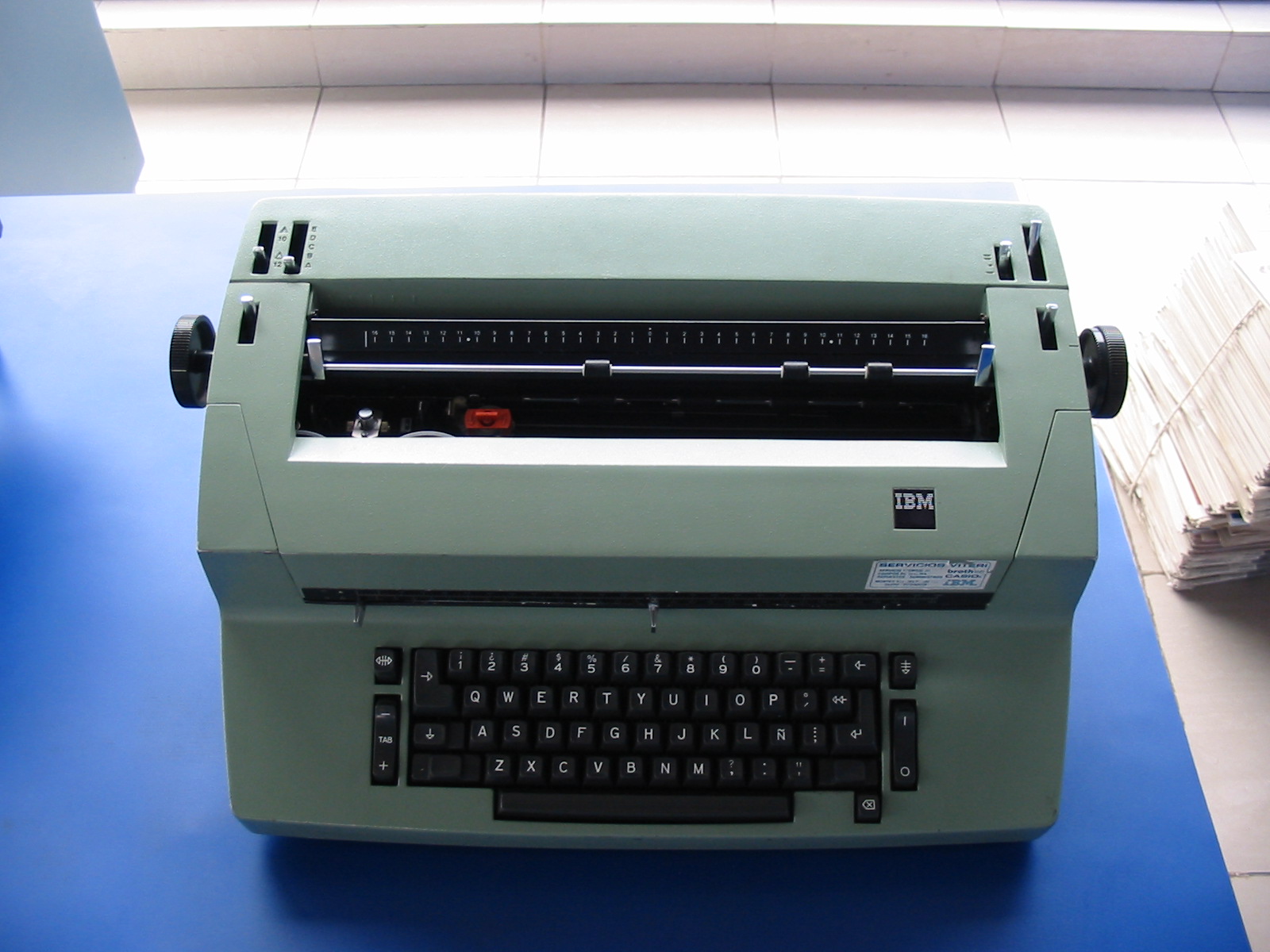 IBM Selectric I / II
The ancestor of word processing. Golf-ball type element, keyboard-like touch, hum underneath everything. The office sound of the late 20th century.
for long sessions
Olivetti Praxis 48 Sottsass's electric
the design-museum portable
Olympia Monica Electric S the German electric portable
Olympia plugged in
IBM Selectric I / II
The ancestor of word processing. Golf-ball type element, keyboard-like touch, hum underneath everything. The office sound of the late 20th century.
for long sessions
Olivetti Praxis 48 Sottsass's electric
the design-museum portable
Olympia Monica Electric S the German electric portable
Olympia plugged in